
 Skip to content
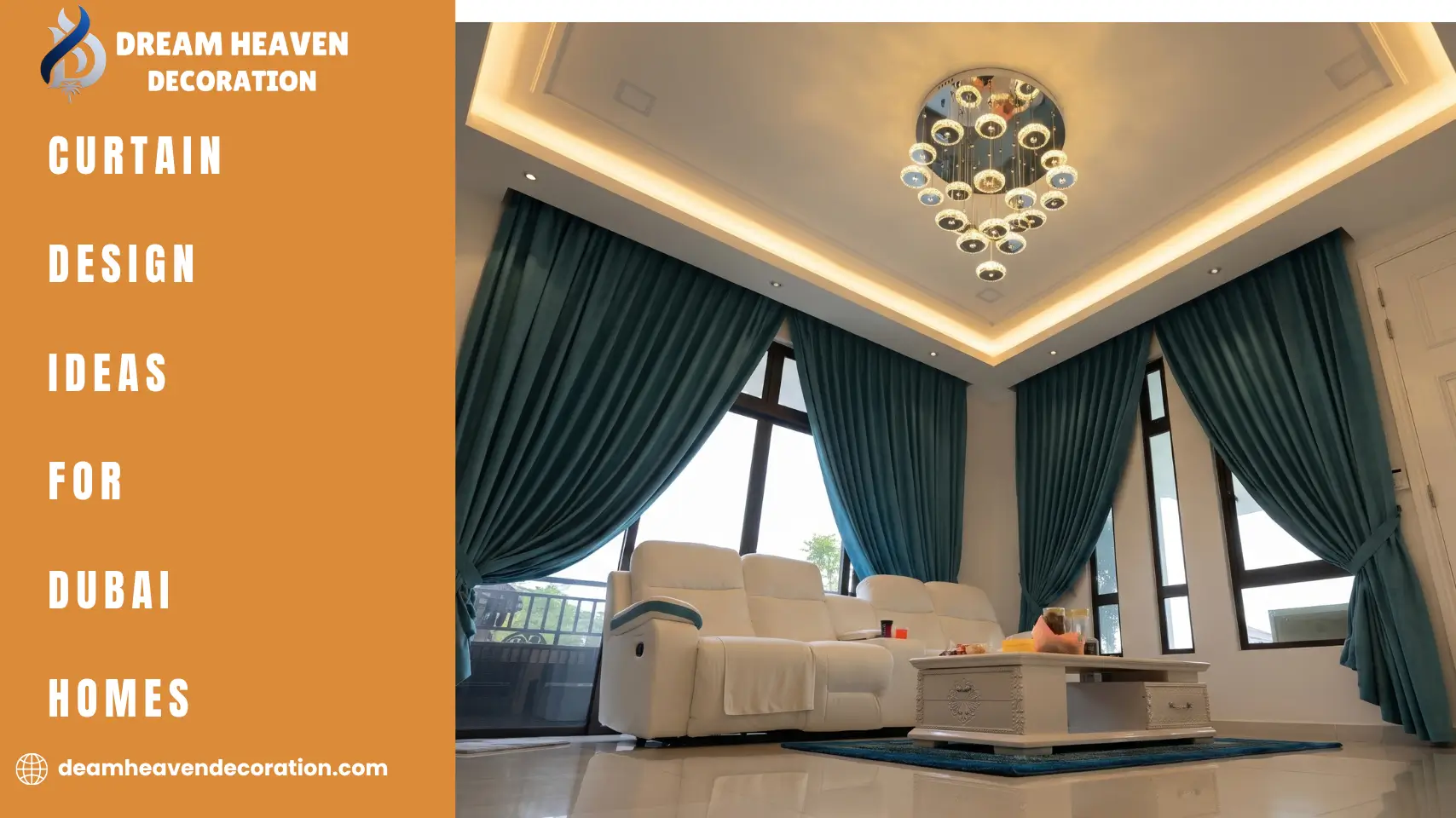
A curtain is not only a cover for a window. In a Dubai house, the best design eliminates glare, reduces the temperature inside the room, prevents dust, and provides a complete look to the space. From floor-to-ceiling glass windows, the sunshine that usually comes daily, and the clean minimalism to full majlis-style interiors, a style guide won’t help much. What you need is an approach that’s built around Dubai’s light and climate.
Below, we’ll go through the curtain styles, fabrics, and colors that really hold up in Dubai homes, and help you decide whether custom or ready-made curtains make more sense for your living room or bedroom.
Dubai’s weather and architecture bring problems that most curtain guides skip over:
For all these reasons, the choice of fabric weight, lining, and hardware must take into account the sun and the heat in Dubai and cannot be replicated from a climate-specific set of advice.
Sheers are light, permeable fabrics that dim the light from the sun and yet allow the room to remain light. They are great for living rooms with a lot of afternoon light, and many people combine them with a thicker curtain when it gets dark at night.
Blackout curtains are tightly constructed or have an additional blackout lining underneath to stop nearly all light out. They’re the obvious pick for bedrooms, home theatres, or any room that gets Dubai’s early sunrise and long, bright evenings.
For most Dubai homes, this is the setup that makes the most sense. The sheer layer takes care of daytime light, and the blackout layer does the job at night. You get flexibility all day long, and you never have to change curtains.
Wave curtains fall in one smooth, continuous S-shaped fold and slide along a track. They look clean and modern, which suits the wide, tall windows in newer Dubai apartments, and they’re especially good on sliding glass doors.
Pleated curtains give a tailored, formal finish. Pinch pleats look structured and traditional, while pencil pleats give a softer, rounder header. They fit majlis areas and formal living rooms where you want a more polished drape.
Motorized curtains are showing up more and more in Dubai villas. They’re very useful for extra-tall windows or glass walls that are hard to reach, and you can control light and privacy with a button or a set timer.
Fabric matters more here than in most places, because of the heat, the UV rays, and the AC running all the time:
A basic rule of Dubai houses: choose the exterior cloth for style and the interior lining for the climate. That’s where proper interior design services can come in handy, as they match the weight of the fabric and the lining to the amount of sun that each window receives rather than just guessing.
Rich, intense colours are usually best used on a single panel or as a cushion trim and rarely on an entire window.
While ready-made curtains may be practical, they don’t always fit Dubai’s unique window dimensions or floor-to-ceiling glass and rarely include the sheer-plus-blackout combination preferred in Dubai homes.
Custom curtain design fixes this by:
If you’re doing a full renovation or fit-out, curtains are usually planned along with furniture, lighting, and wall finishes. That’s where complete decoration & styling services come in, pulling the whole room together instead of leaving curtains as an afterthought.
A professional makes the biggest difference when your home has several windows with different sun exposure, or when the curtains have to go with your existing furniture, flooring, and wall colors. Dream Heaven Decoration works with Dubai homeowners on exactly this. We start by looking at each room’s light, layout, and style, and only then suggest the fabric, color, and curtain structure, so the result works well day to day and looks like it was planned from the beginning.
Linen-cotton blends and thermal-backed or lined fabrics usually work best, since they balance breathability with heat and UV resistance. Polyester blends are also durable and low-maintenance, which makes them a good choice for rooms with lots of sun.
A mix of both is usually the best answer. Sheers handle daytime light, and the blackout layer deals with the early sunrise and gives you full darkness for sleep.
Warm neutrals, earthy tones, and soft muted shades generally look best in Dubai's bright natural light. Keep bold colors for accents rather than the main fabric.
Yes, especially if you have floor-to-ceiling windows or non-standard sizes, which are common in Dubai buildings. Custom design gives you a precise fit, proper layering, and better control over heat and light than ready-made curtains.
The strong sun makes curtains fade and wear out faster than in milder climates. Most homes replace or refresh their curtains every 3–5 years, and sooner for west-facing rooms.
Choosing the right curtain design for a Dubai home comes down to matching fabric, layering, and color to how the room is used and how the light hits it, and not just picking whatever looks good in a showroom. If you’d like a design plan built around your own windows, layout, and style, you can Book a Free Consultation and get recommendations made for your home.
At Dream Heaven Decoration, we believe trust is built through transparency, quality, and commitment. Every project we take on is guided by strict standards to ensure excellence and client satisfaction from start to finish.
Projects completed on schedule without compromising quality.
Every step is tailored to match your vision perfectly.
Contact our Experts for a customized quote and consultation.
© 2026 Dream Heaven Decoration. All Rights Reserved.
 Optimized by Seraphinite Accelerator