 Skip to content
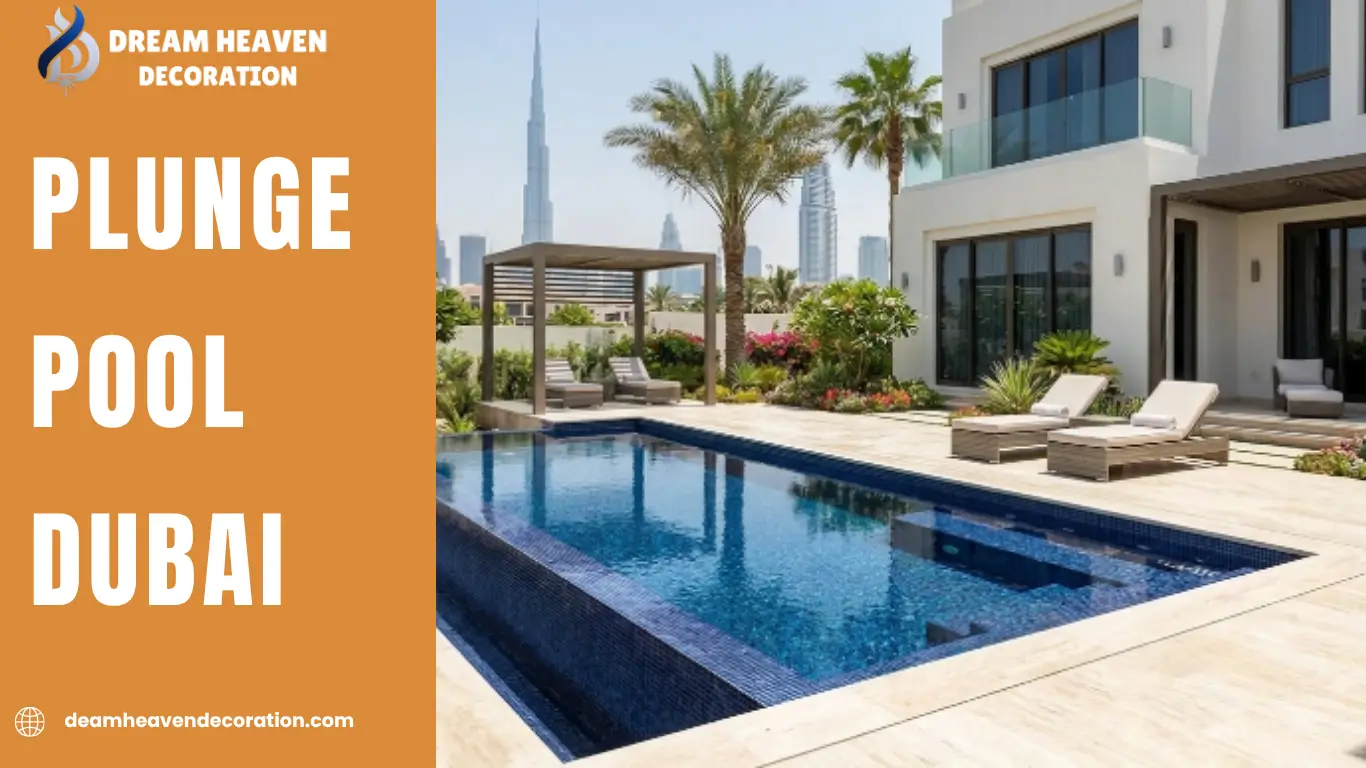
Not every villa in Dubai has the garden footprint for a full-length lap pool, and honestly, not every homeowner wants one. Between the maintenance, the running costs, and the sheer amount of yard space a traditional pool demands, a growing number of Dubai homeowners are opting for something smaller, deeper, and just as satisfying to step into after a long, hot day: a plunge pool.
This guide covers exactly what a plunge pool is, how it compares to a traditional swimming pool, the construction methods used in Dubai, realistic costs, and what to consider before adding one to your property — whether that's a sprawling villa garden or a tight townhouse courtyard.
What Is a Plunge Pool?
A plunge pool is a compact, typically deep pool designed for short, refreshing dips rather than swimming laps. Unlike a traditional pool, which prioritizes length and surface area for active swimming, a plunge pool is built around depth and immersion — generally deep enough to fully submerge and float or lounge in, without needing the space to swim back and forth.
Most plunge pools in Dubai range from around 4 to 8 feet in depth, with a much smaller surface footprint than a conventional pool — sometimes as compact as 3 by 4 meters. That smaller size is precisely the appeal for many homeowners: it delivers the experience and visual impact of a private pool without demanding the land, water volume, or ongoing upkeep of a full-sized installation.

Plan Your Plunge Pool
Call to action today — book a free consultation with the Dream Heaven Decoration team.
Book a Free ConsultationPlunge Pool vs. Traditional Swimming Pool
The two serve genuinely different purposes, and understanding that difference is the starting point for deciding which one actually fits your lifestyle.
Size and Footprint
A traditional pool is built for length and open swimming space, often requiring a substantial stretch of garden. A plunge pool, by contrast, can fit into a much smaller courtyard, terrace, or side garden — making it a realistic option for townhouses and villas on smaller plots where a full pool simply wouldn't fit.
Purpose and Use
Traditional pools are built primarily for active swimming and exercise. Plunge pools are built for cooling off, relaxing, and short therapeutic use — closer in spirit to a large, elegant hot tub than a lap pool, though without spa jets or heating as standard (both of which can be added as customizations).
Water Volume and Running Costs
Because plunge pools hold significantly less water, they typically cost less to fill, heat or chill, and maintain on an ongoing basis compared to a full-sized pool — a genuinely appealing factor in a climate where pool-related utility and maintenance costs can add up quickly over a full year.
Construction Cost
Smaller water volume and footprint generally translate into a lower overall construction cost than a traditional pool, though the exact difference depends heavily on construction method and finish quality, covered in more detail below.
Why Plunge Pools Have Become So Popular in Dubai
Ideal for Smaller Plots
As more Dubai villas and townhouses are built on tighter land plots, a full-sized swimming pool isn't always physically practical. A plunge pool delivers the private-pool experience within a much smaller, more achievable footprint.
Genuine Relief from the Heat
In Dubai's climate, even a small pool provides real, meaningful relief — a plunge pool offers a quick, effective way to cool down without needing the space or cost of a larger installation.
Dual-Season Versatility
Because plunge pools are compact, they can be connected to heating and chilling equipment more efficiently than larger pools, allowing them to function as a cool-down pool in summer and a warm, spa-like soak in cooler winter months — a level of flexibility that's far more expensive to achieve in a full-sized traditional pool.
Hydrotherapy and Low-Impact Exercise
Plunge pools are well suited to hydrotherapy, recovery, and low-impact water exercise, and the compact scale actually works in their favor here — many are specifically designed with this therapeutic use in mind, sometimes alongside spa jets or resistance jets for light exercise against a current.
A Strong Design Statement in a Smaller Space
Because a plunge pool takes up less garden real estate, more budget and attention can go into finishing details — a striking tile pattern, a glass viewing window, integrated lighting, or a sculptural surrounding deck — that might be cost-prohibitive to apply across the surface area of a full-sized pool.

Plunge Pool Construction Methods in Dubai
Fiberglass Reinforced Plastic
A common method in Dubai, where a steel structure is fabricated and then coated with fiberglass reinforced plastic on both interior and exterior surfaces, typically applied at 8mm to 10mm thickness for durability and water resistance. This method often integrates a built-in seating bench and houses the filtration system within the pool structure itself, removing the need for a separate mechanical room — a genuinely practical advantage for smaller properties without extra space to spare.
Gunite or Concrete Construction
A more traditional method using sprayed concrete over a steel rebar structure, finished with tiling, plaster, or pebble finishes. This approach allows for highly customized shapes and sizes but generally takes longer to construct than fiberglass-based methods.
Modular or Prefabricated Pools
Factory-built pool shells delivered to site and installed with comparatively minimal on-site construction time. This method suits homeowners prioritizing a faster installation timeline, though design flexibility is somewhat more limited than fully custom-built options.
Acrylic Viewing Windows
An increasingly popular feature in Dubai plunge pool design, an acrylic viewing window transforms part of the pool wall into a transparent panel, creating a striking visual effect both from inside the pool and from the building facade or adjoining room — particularly popular in villas where the plunge pool is visible from an interior space.

What Does a Plunge Pool Cost in Dubai?
Costs depend heavily on construction method, size, and finishing choices, but the main cost drivers are:
Five Main Cost Drivers
- Construction method. FRP and modular pools are often more cost-effective than fully custom gunite/concrete construction, though finish quality and design flexibility differ between methods.
- Size and depth. Even modest increases in size and water volume affect both material and equipment costs.
- Finishing materials. Tiling, natural stone surrounds, and features like acrylic viewing windows add to the overall budget.
- Equipment. Filtration systems, heating or chilling units, and lighting all factor into total project cost.
- Site accessibility and preparation. Tighter courtyards or complex site access can increase installation costs compared to open, easily accessible garden areas.
As with any pool project, request a detailed, itemized quote covering construction, equipment, and finishing separately, rather than a single bundled figure, so you can compare contractors accurately.
Do You Need Permits for a Plunge Pool in Dubai?
Yes, generally. Similar to a full-sized swimming pool, plunge pool installation typically requires approval from relevant authorities depending on your property type and community, which may include Dubai Municipality, the developer or homeowners' association, and Dubai Civil Defence for safety compliance.
Maintaining a Plunge Pool
Despite the smaller size, a plunge pool still requires the same fundamental maintenance principles as a traditional pool — regular water testing, filtration system upkeep, and cleaning to maintain water quality and safety. The smaller water volume can actually mean maintenance takes less time and fewer chemicals overall compared to a full-sized pool, though consistency still matters, particularly given Dubai's heat and dust, which can affect water clarity faster than in more temperate climates.
Choosing the Right Plunge Pool Company in Dubai
Five Things to Check Before You Hire
- Ask about their construction method and manufacturing process. Companies with in-house fabrication — whether FRP, gunite, or modular — generally offer better quality control and clearer accountability than those outsourcing construction to third parties.
- Request to see completed projects, not just renders. Photos or a site visit to a finished, several-year-old plunge pool tell you far more about long-term finish quality than a polished 3D visualization.
- Confirm what's in the base package versus what counts as a customization. Features like heating, chilling, spa jets, or an acrylic viewing window are often add-ons rather than standard inclusions — get this in writing to avoid surprises later.
- Ask how permits and approvals are handled. Confirm explicitly whether the contractor manages Dubai Municipality, developer NOC, and Civil Defence approvals, or whether that responsibility falls on you.
- Discuss equipment sizing for your specific pool. Filtration, heating, and chilling equipment should be sized correctly for your pool's exact volume — undersized equipment is a common cause of water quality issues down the line.

Common Mistakes to Avoid
- Choosing size purely based on available space. A plunge pool that's too small for comfortable lounging or light exercise can feel more like a large tub than a genuine pool experience, so plan size around how you'll actually use it, not just how much space is left in the garden.
- Skipping heating or chilling equipment to save on upfront cost. One of the biggest missed opportunities with plunge pools specifically, since their compact size makes dual-season use genuinely achievable and cost-effective compared to a full-sized pool.
- Overlooking permit and approval requirements. Confirm responsibility for this in writing before construction begins, not after.
- Underestimating filtration and equipment needs for the pool's actual volume. Correctly sized equipment matters just as much in a plunge pool as in a larger installation.
- Not planning the surrounding deck and finishing together with the pool itself. A beautifully built plunge pool with an afterthought surround rarely achieves the polished, cohesive look most homeowners are aiming for.
See Our Latest Projects
Explore the pools, gardens and outdoor spaces we have completed across Dubai.
View Our PortfolioFrequently Asked Questions
How is a plunge pool different from a hot tub?
Can a plunge pool be heated in Dubai's winter?
How much smaller is a plunge pool compared to a traditional pool?
Is a plunge pool suitable for exercise, or just relaxation?
Do plunge pools need the same maintenance as a full-sized pool?
Conclusion
A plunge pool offers something a full-sized swimming pool often can't on a smaller Dubai property: genuine luxury and daily usability without demanding a large footprint, excessive water volume, or the ongoing running costs that come with a traditional pool. Whether the priority is cooling off after a long day, therapeutic use, or simply a striking design feature for a compact garden, a well-built plunge pool can deliver a genuinely elevated outdoor living experience.
Before committing to a project, get clear on the construction method that suits your budget and timeline, confirm what's included versus customized, and make sure permits and equipment sizing are properly planned from the start. Getting those fundamentals right is what separates a plunge pool that becomes a daily favorite from one that ends up underused and undersized for how you actually wanted to enjoy it.
Get a Free Quote
Contact our experts for a customized quote and consultation from Dream Heaven Decoration.
Request QuoteGuarantees & Policies
At Dream Heaven Decoration, we believe trust is built through transparency, quality, and commitment. Every project we take on is guided by strict standards to ensure excellence and client satisfaction from start to finish.
On-Time Delivery
Projects completed on schedule without compromising quality.
Customer Satisfaction
Every step is tailored to match your vision perfectly.
Get a Free Quote
Contact our experts for a customized quote and consultation.
