Skip to main content


Villa Landscaping Mistakes in Dubai: Check These Before You Build

Most villa landscaping mistakes in Dubai are made on paper, weeks before anyone digs. Wrong plants, water running toward the house, no shade over the seating and one irrigation line for everything are cheap to fix on a drawing and expensive to fix once paving and planting are in.
This guide lists the mistakes we see most often in Dubai villa gardens, why each one matters in this climate, and a short checklist you can run against your own garden plan before you sign it off.
Mistake 1: planning the garden after the house is finished
Gardens are often left until the end of a villa project, when the budget is tight and the levels around the house are already set. By then, the position of drains, AC units, water points and power for lighting is fixed, and the garden has to work around them.
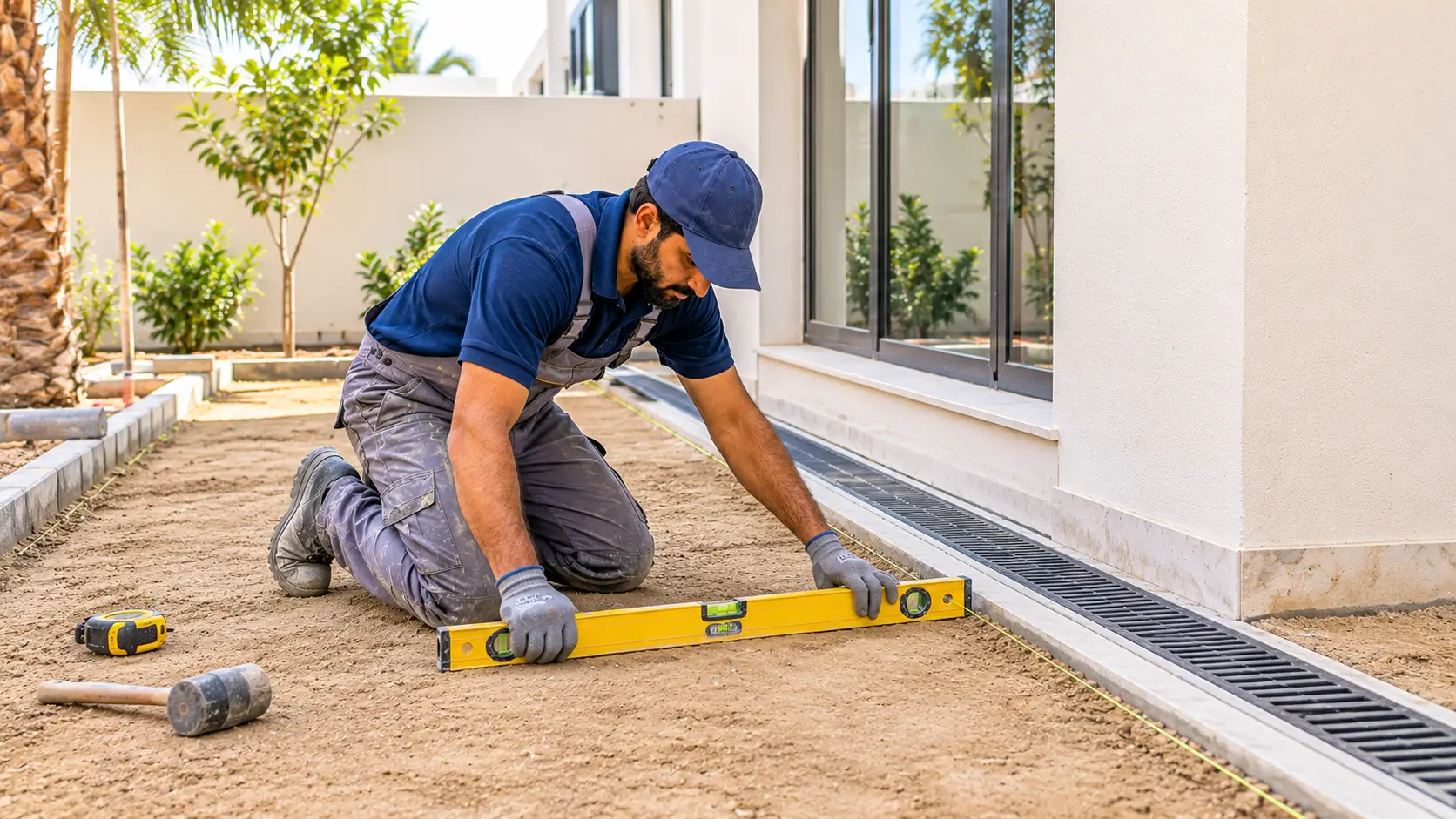
A garden planned alongside the house can place sleeves for irrigation and cables under paving, set falls away from the walls and leave access for future work. That is why professional landscape design starts with a measured survey of levels and services, not with a plant list.
Mistake 2: choosing plants that won't survive a Dubai summer
Plants chosen from photos or from cooler climates often look good in November and struggle by June. Heat, strong sun, wind and sandy ground all test them.
- Soil: garden soil in Dubai is typically sandy and alkaline, so beds usually need organic matter worked in before planting.
- Grouping: plants with similar water needs should sit together, so one zone is not overwatered to keep another alive.
- Mature size: a small shrub next to a wall or pool edge can outgrow its space within a few seasons.
Ask your designer to show which plants are in each irrigation zone. If thirsty and drought-tolerant plants share a zone, one group will always suffer.
Mistake 3: ignoring drainage and levels
Rain is rare in Dubai, but irrigation runs every day and the occasional heavy storm arrives with little warning. If the ground slopes toward the house, water collects against walls, under doors and around foundations.
Check that hard surfaces fall away from the villa, that planting beds next to walls are not watered against the wall itself, and that there is somewhere for storm water to go.
Mistake 4: no shade where people actually sit
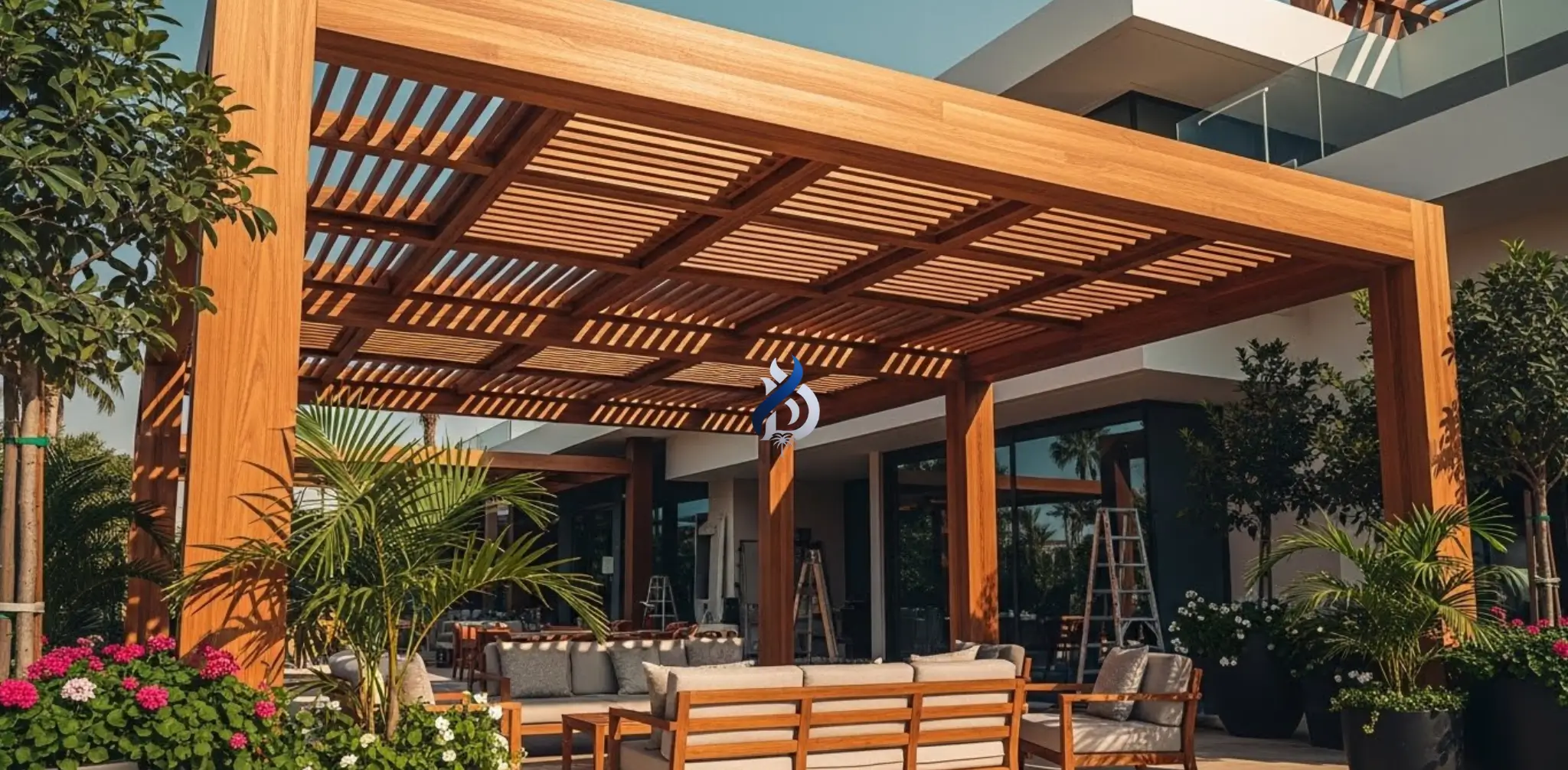
A seating area in full afternoon sun will not be used for much of the year. Before deciding where the terrace goes, look at where the sun is between 3 pm and sunset, when most families are outside.
Shade can come from a pergola, a shade sail, the house itself or trees, but trees take years to give real shade. Plan the shade at the same time as the seating, not as an afterthought.
Think about heat from hard surfaces too. Large areas of pale paving reflect light and heat back at people sitting nearby, while planting and shade cool the space. A shaded seating area surrounded by some planting is usually far more comfortable than an open terrace of the same size.
Mistake 5: one irrigation zone for everything
Lawns, shrub beds, trees and pots all need different amounts of water. A single irrigation line set to keep the lawn green will drown some plants and underwater others.
| Area | Usual approach | Why |
|---|---|---|
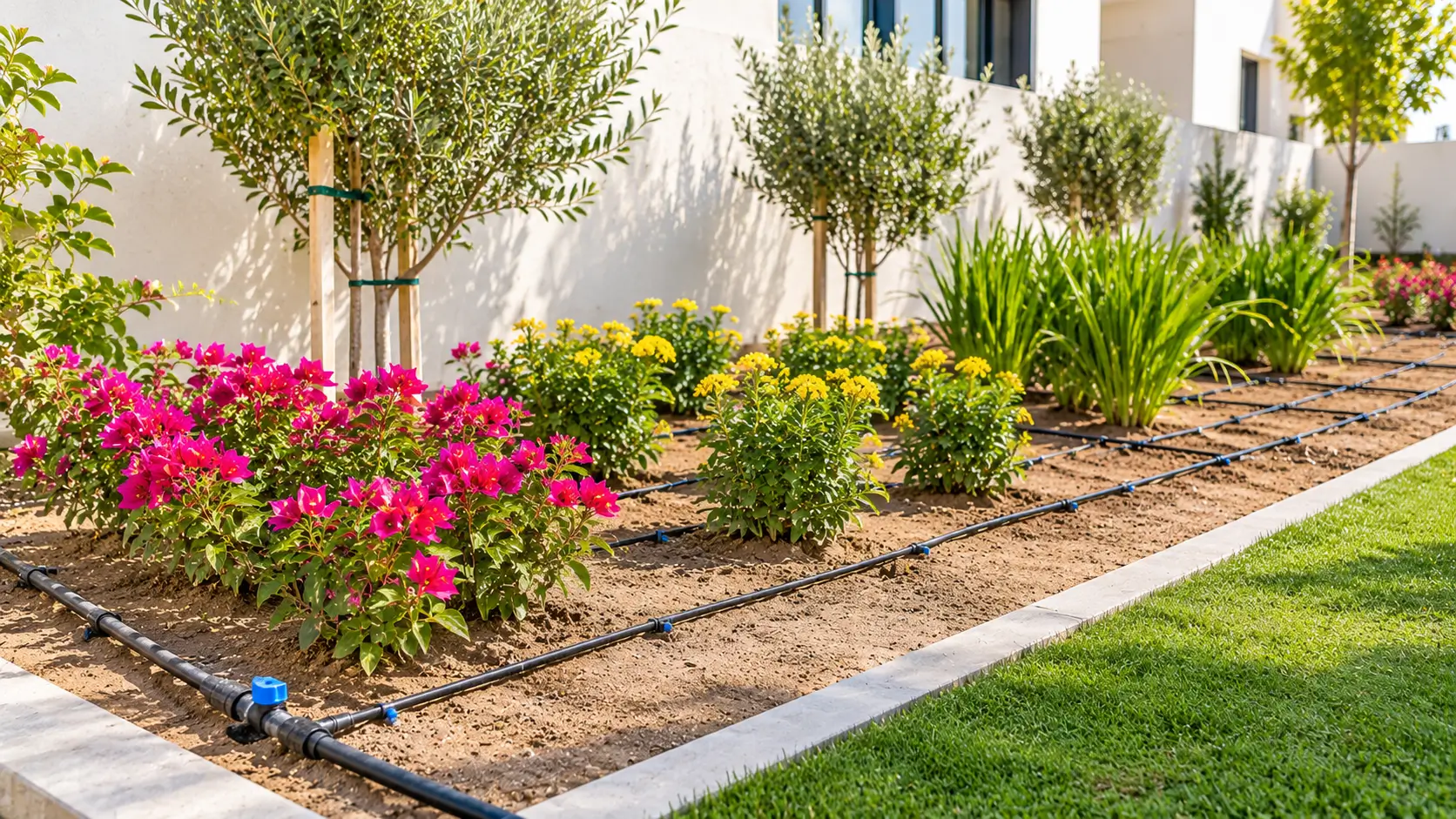
| Planting beds | Drip irrigation | Water goes to the roots, with less loss to evaporation |
| Lawn | Sprinklers on their own zone | Even cover across a large flat area |
| Trees | Separate drip or bubbler line | Deeper, less frequent watering than shrubs |
| Pots and planters | Own drip line or hand watering | Dry out faster than ground beds |
Drip for beds and sprinklers for lawns is the common pattern; your designer should confirm zones for your garden.
Mistake 6: too much lawn, or the wrong turf
A large natural lawn uses a lot of water and needs regular mowing, feeding and summer care. Many villa owners now keep a smaller lawn where children play and use paving, gravel or planting elsewhere.
If you are weighing natural grass against artificial grass, compare turf options for hot climates before you decide. Think about how hot each surface gets in the afternoon, how it will be cleaned and whether pets will use it.
Water use
Natural lawn needs daily irrigation in summer; artificial turf needs none for growth.
Surface heat
Any surface in direct afternoon sun gets hot. Shade matters as much as the material.
Upkeep
Natural grass needs mowing and feeding; artificial turf needs brushing and rinsing.
Use
Decide where children, pets and guests will actually spend time before choosing.
Mistake 7: forgetting maintenance and access
Gardens are often designed for the day of handover. Ask who will maintain the irrigation, prune and replace plants, and how they will reach the pool equipment, AC units and water tanks without walking through planting beds.
Leave clear access paths and space around equipment. A beautiful bed planted in front of the pool plant room will be trampled within a month.
Pre-build checklist: avoid these villa landscaping mistakes
Run through these points with your drawing in front of you. If the answer to any of them is "not sure", ask before work starts.
- Levels: Do all hard surfaces fall away from the house?
- Sleeves: Are pipes laid under paving for future irrigation and lighting cables?
- Zones: Is irrigation split into separate zones for lawn, beds and trees?
- Soil: Is soil preparation included, not just planting?
- Plants: Are plants grouped by water need, with mature sizes shown?
- Shade: Is the main seating area shaded in the late afternoon?
- Access: Can you reach pool equipment, AC units and tanks without crossing beds?
- Approval: Has your developer or community confirmed what you can build?
- Upkeep: Do you know who maintains the garden and the irrigation controller?
Approval rules differ between communities. Check with your developer before building walls, pergolas or large hardscape, and for structural works confirm what Dubai Municipality requires.
Want a second opinion on your plan?
We review garden drawings for levels, irrigation and shade before you build. The site visit is free.
Dream Heaven Decoration's designers look at every garden plan with the house in mind: levels, services, sun and how the family will use the space. If you already have a drawing, have your garden plan checked before work starts.
Frequently asked questions
Which plants survive a Dubai summer with little water?
Plants suited to heat, sun and sandy soil do best, especially once established. The safest approach is to choose species your landscaper has grown successfully in local gardens, group them by water need and give them time to root in the cooler months before their first summer.
Is artificial grass better than a real lawn for a villa?
It depends on how you use the garden. Artificial grass needs no watering or mowing but still gets hot in direct sun and needs cleaning. A real lawn feels cooler underfoot but needs daily summer irrigation and regular care. Many owners keep a small real lawn and use other surfaces elsewhere.
When should irrigation be planned in a garden project?
Irrigation should be planned at the design stage, before paving or planting. Pipes and sleeves need to run under hard surfaces, and zones need to match planting groups. Adding irrigation after paving usually means cutting into finished work or running pipes where they look out of place.
Do I need community approval before landscaping my villa?
Many developers and communities have rules on walls, structures, trees and hardscape, and some need an application before work starts. Planting alone is usually simpler. Check with your developer or community management first, and keep any approval letter on site while the work is carried out.

Muhammad leads Dream Heaven Decoration from its office in Deira, Dubai, overseeing interior fit-out, exterior, pool, pergola and landscaping projects for villas, apartments and businesses.