 Skip to content
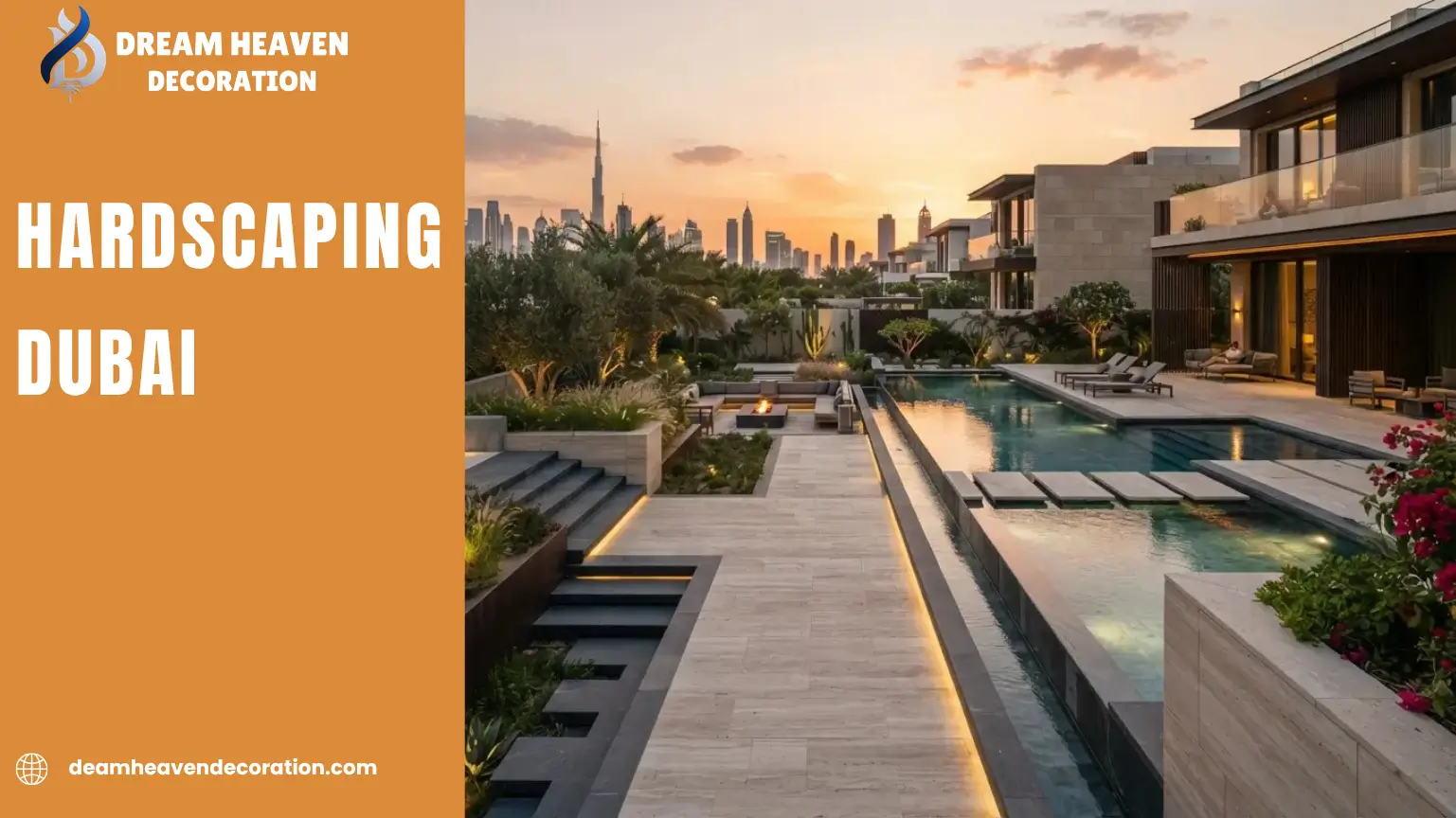
Walk into any well-designed villa garden in Dubai Hills, Emirates Hills, or Arabian Ranches, and the greenery is rarely the first thing that makes the space feel finished. It's the stone underfoot, the clean lines of a paved patio, the retaining wall that quietly holds a raised planting bed in place, the pergola casting shade exactly where it's needed. That's hardscaping — and in a climate like Dubai's, it's not a decorative afterthought. It's the structural foundation everything else in the garden depends on.
This guide goes deep into what hardscaping actually involves, the individual elements that make it up, the materials best suited to Dubai's climate, how much it typically costs, and what separates a hardscape that lasts twenty years from one that starts cracking within two.
What Is Hardscaping?
Hardscaping refers to the non-living, structural elements of an outdoor space — anything built from stone, concrete, wood, or other hard materials, as opposed to plants, grass, and other living elements (which fall under softscaping). Patios, driveways, walkways, retaining walls, pergolas, and decorative stonework are all examples of hardscape features.
Where softscaping brings color, texture, and seasonal change to a garden, hardscaping provides the underlying structure — the framework that everything else is built around. A garden without proper hardscaping tends to feel unfinished and impractical, no matter how well the planting is done, because there's no defined structure guiding how the space is actually used.

Hardscaping vs. Softscaping: Why the Balance Matters
Neither element works particularly well without the other. Hardscaping defines the "bones" of a garden — where people walk, sit, gather, and how water and shade are managed — while softscaping fills in the life and seasonal character around that structure. In Dubai specifically, where extreme heat limits how much of a garden can realistically be lush, dense planting year-round, hardscaping often carries even more of the design's visual weight than it would in a more temperate climate. A well-planned hardscape can make a garden feel complete and considered even with relatively modest planting.
Plan Your Garden Hardscape
Call to action today — book a free consultation with the Dream Heaven Decoration team.
Book a Free ConsultationWhy Hardscaping Matters So Much in Dubai Specifically
Dubai's climate places real demands on outdoor design that don't apply in most other regions, and this is exactly why hardscaping deserves careful planning rather than a generic, one-size-fits-all approach.
Extreme Heat
Surface temperatures in direct summer sun can become genuinely uncomfortable underfoot, which makes material selection not just appearance, but actual heat retention and reflectivity — a real functional consideration, not just an aesthetic one.
Sandy, Shifting Soil
Much of Dubai sits on sandy, loose soil that doesn't hold structures the way denser clay or loam soils do elsewhere. This makes proper base preparation and compaction absolutely critical for anything load-bearing, from driveways to retaining walls — cutting corners here is one of the most common causes of cracking and shifting within just a few years.
Occasional Heavy Rainfall
While rare, Dubai does experience intense rainfall events, and flat, poorly graded hardscape surfaces can pool water quickly when they occur. Proper drainage planning during the design stage prevents this from becoming a recurring problem.
Minimal Natural Shade
Without mature trees providing shade the way older, more established gardens elsewhere might have, structural shade — pergolas, shaded seating areas, covered walkways — becomes a functional hardscaping requirement, not just a nice-to-have design feature.

Core Hardscaping Elements Explained
Patios and Terraces
A patio is typically the anchor of an outdoor living space — the primary area for seating, dining, and entertaining. In Dubai, patios are increasingly designed with some form of shade integration (pergolas, shade sails, or covered structures) built in from the start, rather than added later, since an unshaded patio often goes unused during the hottest months.
Driveways
Beyond pure function, a driveway is often the first hardscape feature anyone sees when approaching a villa, which makes material choice and finish quality genuinely important for curb appeal. Driveways also carry significant structural load, requiring a properly engineered base to prevent cracking or settling over time, particularly for larger vehicles.
Walkways and Pathways
Pathways guide movement through a garden and connect different zones — entrance to patio, patio to pool, pool to majlis seating area. Good pathway design considers not just the route itself but width, material grip (particularly near pool areas), and how the path visually ties different parts of the garden together.
Retaining Walls
Retaining walls hold back soil to create level changes, raised planting beds, or terraced garden areas. In Dubai's sandy soil conditions, retaining walls need proper engineering and drainage behind them — without it, soil pressure and water buildup can cause walls to bow or fail over time.
Pergolas and Shade Structures
Given how central shade is to making an outdoor space usable in Dubai, pergolas have become one of the most requested hardscape features in villa gardens. They can be built from timber, aluminum, or a combination of materials, and are often paired with retractable louvers or fabric canopies for adjustable shade coverage throughout the day.
Pool Surrounds and Decking
The hardscaping around a swimming pool needs to balance aesthetics with genuine safety — non-slip surfaces, heat-resistant materials, and proper drainage away from the pool edge are all functional requirements, not just design choices.
Steps and Level Changes
Villa gardens with sloped or multi-level layouts often need carefully designed steps connecting different elevations, which need to be built to consistent, safe proportions rather than simply following the slope of the land.
Water Features
Fountains, reflecting pools, and cascading water walls are a popular hardscape addition in Dubai gardens, partly for their aesthetic value and partly because moving water provides a genuine, if modest, cooling effect in outdoor seating areas.
Fire Features
Fire pits and built-in fire features have grown in popularity for cooler-season evening use, giving villa gardens a functional gathering point once the extreme summer heat has passed.
Choosing the Right Hardscaping Materials for Dubai's Climate
Natural Stone
Materials like travertine, limestone, and granite are prized for their durability and natural cooling properties underfoot compared to darker, denser materials. Natural stone also ages well visually, developing character over time rather than looking worn out. The trade-off is a higher upfront cost and the need for periodic sealing, depending on the specific stone type.
Porcelain Pavers
Increasingly popular for driveways, patios, and pool surrounds, porcelain pavers offer excellent durability, low water absorption, and resistance to staining and fading — genuine advantages in Dubai's climate. They're also available in large formats that closely mimic natural stone, offering a similar look with lower long-term maintenance.
Concrete Pavers
A cost-effective and highly versatile option, available in a wide range of colors, shapes, and finishes, including stamped concrete designs that mimic natural stone at a lower price point. Concrete pavers are practical for larger areas like driveways where covering significant square footage in natural stone would be costly.
Poured and Stamped Concrete
Useful for continuous surfaces without the visible joints of paver-based installations, stamped concrete can also replicate stone or tile patterns. Proper expansion joints are essential in Dubai's climate to prevent cracking from thermal expansion during extreme heat.
Composite (WPC) Decking
Wood-plastic composite decking has become a popular alternative to natural timber decking for pool surrounds and elevated patio areas, offering better resistance to heat, moisture, and UV fading than natural wood, with significantly lower maintenance requirements.
Natural Timber
Still used for pergola framing and select decking applications where a warmer, more traditional look is preferred, though it requires more regular maintenance and protective treatment to hold up against Dubai's sun and heat over time compared to composite alternatives.

What Does Hardscaping Cost in Dubai?
Costs vary considerably based on material choice, area size, and design complexity, but the main cost drivers are consistent across most projects:
Five Main Cost Drivers
- Material selection. Natural stone costs significantly more than concrete pavers or stamped concrete for an equivalent area.
- Site preparation and excavation. Sites requiring significant grading, soil removal, or drainage work add meaningfully to the total cost.
- Structural elements. Retaining walls and multi-level designs require more engineering and labor than flat, single-level patios or pathways.
- Custom features. Water features, fire features, and integrated pergolas add cost beyond basic paving or decking.
- Project scale. Larger properties naturally require more material and labor, though cost per square meter can sometimes improve slightly with scale.
As with any construction project, always request an itemized quote separating material cost, site preparation, and labor, rather than relying on a single bundled estimate — this makes it far easier to compare quotes accurately between contractors and to understand exactly where your budget is being spent.
The Hardscaping Design and Installation Process
- Site Assessment and Consultation. A proper hardscaping project starts with a site visit to assess soil conditions, existing drainage, sun and shade patterns, and how the space connects to the rest of the property.
- Design and Layout Planning. Hardscape elements are planned as a unified system — pathways connecting to patios, patios flowing toward pool areas, retaining walls integrated with planting design — rather than as isolated, disconnected features.
- Material Selection. Based on budget, aesthetic preference, and the specific functional demands of each area (heat exposure, foot traffic, proximity to water), appropriate materials are selected for each hardscape element.
- Excavation and Base Preparation. This is the stage that determines long-term durability more than any other. Proper excavation, base layer compaction, and drainage planning need to happen correctly before any visible paving or structural work begins.
- Structural and Paving Work. Retaining walls, steps, and structural elements are built first where relevant, followed by paving, decking, or poured surface installation according to the approved design.
- Integration of Features. Pergolas, water features, lighting, and fire features are installed and integrated into the completed hardscape structure.
- Final Inspection and Handover. The completed hardscape is inspected for level surfaces, proper drainage, and finish quality before handover, ideally including a walkthrough explaining any maintenance requirements specific to the materials used.
How to Choose the Right Hardscaping Company in Dubai
Five Things to Check Before You Hire
- Ask specifically about soil preparation and drainage planning. A contractor who explains their base preparation approach in real detail is a strong signal of genuine technical competence, not just design taste.
- Review completed projects that are a few years old, not just fresh installations. This tells you far more about how a contractor's work actually holds up against Dubai's heat and soil conditions over time.
- Confirm whether structural design is engineered properly. For anything beyond a flat patio or simple pathway, ask whether structural elements (retaining walls, level changes) are designed by someone with genuine engineering knowledge, not just general landscaping experience.
- Get a detailed, itemized quote. Material, site preparation, structural work, and any custom features should be broken down separately, not bundled into a single vague figure.
- Ask how hardscape and softscape design are coordinated. The strongest results come from contractors who plan hardscaping and planting together as one integrated design, rather than treating them as entirely separate projects.

Common Mistakes to Avoid
- Skipping proper soil compaction and base preparation. This is, by a wide margin, the most common cause of cracking, shifting, and settling in Dubai hardscape projects.
- Choosing materials based purely on appearance. A beautiful material that retains too much heat or requires maintenance you're not prepared for becomes a genuine daily frustration.
- Ignoring drainage planning until after installation. Retrofitting drainage into a finished hardscape is far more disruptive and costly than planning it correctly from the start.
- Designing hardscape and softscape separately. A disjointed garden often results when paving, planting, and structural features are planned in isolation rather than as one cohesive system.
- Underestimating the need for shade. A stunning patio that's unusable for eight months of the year due to lack of shade planning is a genuinely common and avoidable regret.
See Our Latest Projects
Explore the gardens, patios and outdoor spaces we have completed across Dubai.
View Our PortfolioFrequently Asked Questions
What's the difference between hardscaping and landscaping?
What materials work best for hardscaping in Dubai's heat?
Do I need a structural engineer for retaining walls in my garden?
How long does a typical hardscaping project take?
Can hardscaping be done in stages rather than all at once?
Conclusion
Hardscaping is genuinely the foundation of a successful outdoor space in Dubai — not just visually, but structurally and functionally, given how much the region's heat, soil, and occasional heavy rainfall demand from anything built outdoors. The strongest results come from treating hardscaping as an engineered, carefully planned system rather than a collection of individually chosen decorative features.
Before starting a project, get clear on how the space will actually be used, ask any contractor detailed questions about soil preparation and drainage, and make sure hardscape and softscape design are planned together from day one. Getting those fundamentals right is what separates a garden that looks impressive in the first year from one that genuinely holds up, season after season, for decades to come.
Get a Free Quote
Contact our experts for a customized quote and consultation from Dream Heaven Decoration.
Request QuoteGuarantees & Policies
At Dream Heaven Decoration, we believe trust is built through transparency, quality, and commitment. Every project we take on is guided by strict standards to ensure excellence and client satisfaction from start to finish.
On-Time Delivery
Projects completed on schedule without compromising quality.
Customer Satisfaction
Every step is tailored to match your vision perfectly.
Get a Free Quote
Contact our experts for a customized quote and consultation.
