 Skip to content
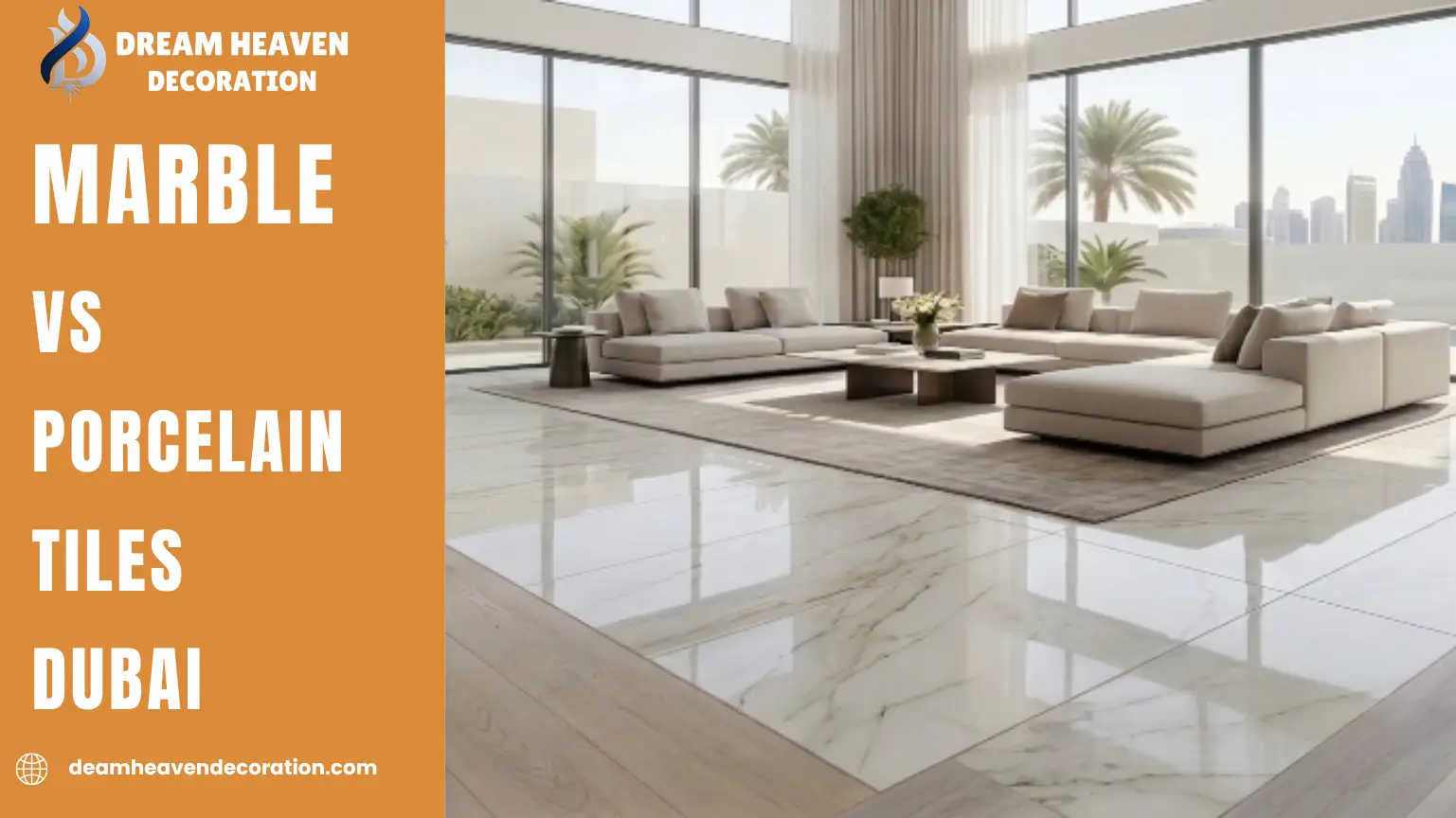
Drive past almost any new development in Dubai Hills, walk into a villa entrance hall on Palm Jumeirah, or step into a hotel lobby on Sheikh Zayed Road, and there’s a good chance you’re looking at one of two materials: natural marble, or a porcelain tile designed to look almost exactly like it. From a distance, the two can be nearly impossible to tell apart. Underfoot, over a decade of Dubai’s heat, humidity, and daily wear, the difference becomes very clear.
This comparison is one of the most common decisions homeowners and designers face in the UAE, and it’s not a simple “one is better” answer — it genuinely depends on the room, the budget, and how much long-term maintenance you’re willing to take on. This guide breaks down how marble and porcelain actually compare on durability, cost, maintenance, appearance, and suitability for Dubai’s climate, so you can make the right call for your specific space.
What's the Real Difference Between Marble and Porcelain?
Marble is a natural stone, quarried and cut into slabs or tiles. Every piece carries unique veining and color variation, since it’s formed by geological processes over millions of years — no two slabs are ever truly identical.
Porcelain is a manufactured tile, made from refined clay and feldspar fired at extremely high temperatures (typically over 1,200°C). Modern digital printing and surface texturing technology allow porcelain to closely replicate marble’s veining, color depth, and even its polished or honed finish — while remaining a fundamentally different, denser material underneath. That manufacturing difference is what drives almost every practical distinction between the two.

Get Help Choosing Your Tiles
Call to action today — book a free consultation with the Dream Heaven Decoration team.
Book a Free ConsultationDurability and Performance in Dubai's Climate
This is where the comparison matters most for UAE homeowners specifically, since Dubai’s climate is genuinely harsh on flooring — intense summer heat, high humidity for months at a time, sand and dust, and heavy air-conditioning cycling that causes constant temperature and humidity swings indoors.
Water Absorption
Porcelain is a very low-porosity material, generally absorbing well under 0.5% of its weight in water. Natural marble, by contrast, is porous and can gradually absorb moisture over time, which becomes relevant in humid conditions or wet areas like bathrooms, kitchens, and poolside spaces.
Heat and Thermal Stability
Both materials handle Dubai’s heat reasonably well and stay noticeably cooler underfoot than materials like vinyl or engineered wood. Porcelain, however, tends to be more thermally stable over the long run, since it doesn’t develop the hairline cracks or dulling that natural marble can show after years of heat exposure, particularly in outdoor-connected spaces like covered terraces or entrance halls.
Scratch and Stain Resistance
Porcelain’s density makes it highly resistant to scratches, staining, and everyday wear — a genuine advantage in high-traffic areas like entrances, hallways, and kitchens. Marble is softer and more prone to etching from acidic substances (lemon juice, certain cleaning products) and can stain if spills aren’t cleaned promptly, which is part of why it requires more careful, ongoing maintenance.
Longevity
Both materials can last for decades when properly installed and maintained. Marble has genuine historical proof of longevity — it’s the material of centuries-old palaces and monuments — but that longevity depends heavily on consistent sealing and care. Porcelain’s low maintenance requirements make its long lifespan far easier to achieve without ongoing upkeep.
Marble vs Porcelain Tiles in Dubai
Cost is often the deciding factor, and the gap between the two materials can be significant.
| Material | Typical Installed Cost (per m²) | Notes |
|---|---|---|
| Standard porcelain tiles | AED 65–150 | Grade A, common sizes (60x60cm and similar) |
| Marble-look porcelain (large format) | AED 80–350 | Depending on size, finish, and brand |
| Natural marble (Carrara) | AED 220–600+ | Includes sealing and finishing |
| Natural marble (Calacatta / premium) | AED 800–2,500+ | Includes installation, sealing, and finishing |
For a mid-sized villa floor, choosing a high-quality marble-look porcelain tile over genuine Calacatta marble can save a substantial amount — often tens of thousands of dirhams — without a dramatic visible difference to most people, particularly once the floor is furnished and lived in.
Labor costs for installation are broadly similar between the two, though natural marble often requires more skilled handling, precise cutting, and post-installation sealing, which can add to the overall project cost beyond the material price itself.
What Ongoing Care Actually Looks Like
Marble Maintenance
Natural marble needs periodic sealing — typically annually — to protect against staining and moisture absorption. Cleaning also requires pH-neutral products, since acidic or abrasive cleaners can dull the polished surface or cause etching over time. This ongoing care is manageable, but it’s a genuine commitment that porcelain simply doesn’t require.
Porcelain Maintenance
Porcelain needs no sealing and can be cleaned with standard household products without worrying about damaging the surface. For busy households, rental properties, or commercial spaces where consistent upkeep isn’t guaranteed, this lower-maintenance profile is one of porcelain’s strongest practical advantages.
Appearance and Design Flexibility
Natural marble offers something porcelain fundamentally can’t fully replicate: genuine uniqueness. Every slab’s veining pattern is one-of-a-kind, and for homeowners who want that authentic, unrepeatable natural stone character — especially in a statement feature wall or a grand entrance — nothing else quite matches it.
That said, modern marble-look porcelain has closed the visual gap dramatically. High-quality digital printing technology can now reproduce Carrara, Calacatta, and other marble veining patterns with striking accuracy, available in large formats up to 160x320cm with matching wall and floor pieces for a seamless, continuous look. For most people, especially once a room is fully furnished, distinguishing a well-chosen marble-look porcelain from genuine marble at a glance is genuinely difficult.

Where Each Material Works Best
Best Rooms for Marble
- Feature walls and statement entrances where the natural, unique veining can be fully appreciated
- Low-moisture formal spaces, such as a majlis or living room, where the maintenance routine is easier to manage
- Luxury bathrooms for households prepared to commit to regular sealing and careful cleaning
Best Rooms for Porcelain
- Kitchens, where spills, heat, and heavy daily use make low-maintenance durability especially valuable
- Bathrooms and wet areas, thanks to its near-zero water absorption
- Outdoor-connected spaces like terraces, balconies, and pool decks, where UV and thermal resistance matter most
- High-traffic zones such as hallways, entrances, and commercial spaces, where scratch and stain resistance directly affects long-term appearance
Villas vs Apartments
Villas, with larger floor areas and more varied indoor-outdoor spaces, often use a mix of both — marble or marble-look porcelain in formal areas, and pure porcelain in kitchens, bathrooms, and outdoor-facing spaces. Apartments, where budgets and maintenance time are often more constrained, tend to lean more heavily toward porcelain throughout, reserving marble (if used at all) for smaller feature areas like a bathroom accent wall.

How to Choose Between Marble and Porcelain for Your Project
- Start with the room’s moisture exposure. Kitchens, bathrooms, and any outdoor-connected space favor porcelain’s low porosity and easier upkeep.
- Be honest about maintenance commitment. If regular sealing and careful cleaning genuinely isn’t realistic for your household or property management setup, porcelain will serve you better long-term, regardless of budget.
- Consider the space’s purpose. A statement entrance or a single feature wall is where genuine marble’s uniqueness has the most visual impact; large, high-traffic floor areas generally benefit more from porcelain’s durability.
- Compare total project cost, not just tile price. Factor in sealing, specialized installation, and long-term maintenance costs for marble, not just the per-square-metre tile price, when comparing it against porcelain.
- View large samples before deciding, especially for marble-look porcelain. Veining patterns and finish quality vary significantly between suppliers, and a small sample doesn’t always represent how a large-format floor will look once fully laid.
Common Mistakes to Avoid
- Choosing marble purely for status without factoring in maintenance. A beautiful marble floor that isn’t properly sealed and cared for will show wear far faster than expected.
- Assuming all porcelain looks equally convincing as marble. Quality varies significantly between brands and price tiers — cheaper porcelain often has flatter, more repetitive veining patterns that look noticeably artificial up close.
- Using natural marble in high-moisture areas without proper sealing. This is one of the most common causes of staining and etching in UAE bathrooms and kitchens.
- Ignoring slip resistance ratings, particularly for wet areas, pool decks, and outdoor spaces — both materials come in various finishes, and a glossy, polished finish isn’t always the safest choice for these zones.
- Underestimating installation skill requirements for marble. Poor cutting, uneven joints, or incorrect adhesive can significantly affect both appearance and longevity.

See Our Latest Projects
Explore villas, interiors and finishes we have completed across Dubai.
Our PortfolioFrequently Asked Questions
Is porcelain really as durable as marble in Dubai's climate?
Can porcelain tiles really look like real marble?
Which is more expensive, marble or porcelain?
Does marble need more maintenance than porcelain?
Should I use marble or porcelain in a kitchen?
Conclusion
Neither material is objectively “better” — the right choice depends on what a specific room actually needs to handle, and how much ongoing maintenance you’re realistically prepared to commit to. Natural marble offers a genuine, unrepeatable beauty that remains unmatched for statement spaces, while porcelain delivers a remarkably close visual match with far greater durability and dramatically lower maintenance, particularly well-suited to Dubai’s climate and the practical demands of kitchens, bathrooms, and high-traffic areas.
For most modern UAE homes, the strongest results come from combining both — genuine marble where its unique character can shine, and high-quality marble-look porcelain everywhere durability and low maintenance matter more than absolute material authenticity.
Not Sure Which Suits Your Rooms?
Book a free consultation and Dream Heaven Decoration will walk through the right material for each room of your home.
Book a Free ConsultationGuarantees & Policies
At Dream Heaven Decoration, we believe trust is built through transparency, quality, and commitment. Every project we take on is guided by strict standards to ensure excellence and client satisfaction from start to finish.
On-Time Delivery
Projects completed on schedule without compromising quality.
Customer Satisfaction
Every step is tailored to match your vision perfectly.
Get a Free Quote
Contact our experts for a customized quote and consultation.
