 Skip to main content

Interlock Tiles Dubai: Expert Installation, Cost per Sq Ft & Guide

Pull into almost any older Dubai villa, and you’ll spot the same story: a driveway with hairline cracks running through it, or a garden path where weeds have pushed their way up between the slabs. Plain concrete and standard tiles just don’t hold up well here. The heat expands them, the ground shifts, and eventually something gives. That’s why so many homeowners choose interlock tiles instead. They flex slightly rather than break, they let water drain through rather than pool, and if one is damaged, you can lift it out and replace it without disturbing the rest.
This guide covers what you actually need to know before starting an interlock project: what the tiles are, realistic AED pricing, how the installation is done, and the mistakes that cause most of the complaints you’ll read online. If you’re weighing up flooring options more broadly, our tiles installation page covers indoor and outdoor work beyond just interlock.
What are interlock tiles, and why are they so popular in Dubai?
Interlock tiles are precast concrete, clay, or stone blocks cut to fit tightly against each other without any mortar or cement holding them in place. That interlocking shape is the whole point. It lets the surface move very slightly under heat and pressure instead of splitting, which matters a lot when ground temperatures here can climb past 60°C in summer.
A few reasons people choose them over concrete or ceramic outdoors:
- They handle heat without cracking the way poured concrete tends to.
- Water drains through the gaps rather than sitting on the surface.
- A single cracked or stained piece can be swapped out on its own.
- There’s a genuinely wide range of colors, shapes, and laying patterns to work with.
Types of interlock tiles you’ll find in Dubai
Not every job calls for the same tile. Roughly speaking, here’s what gets used most:
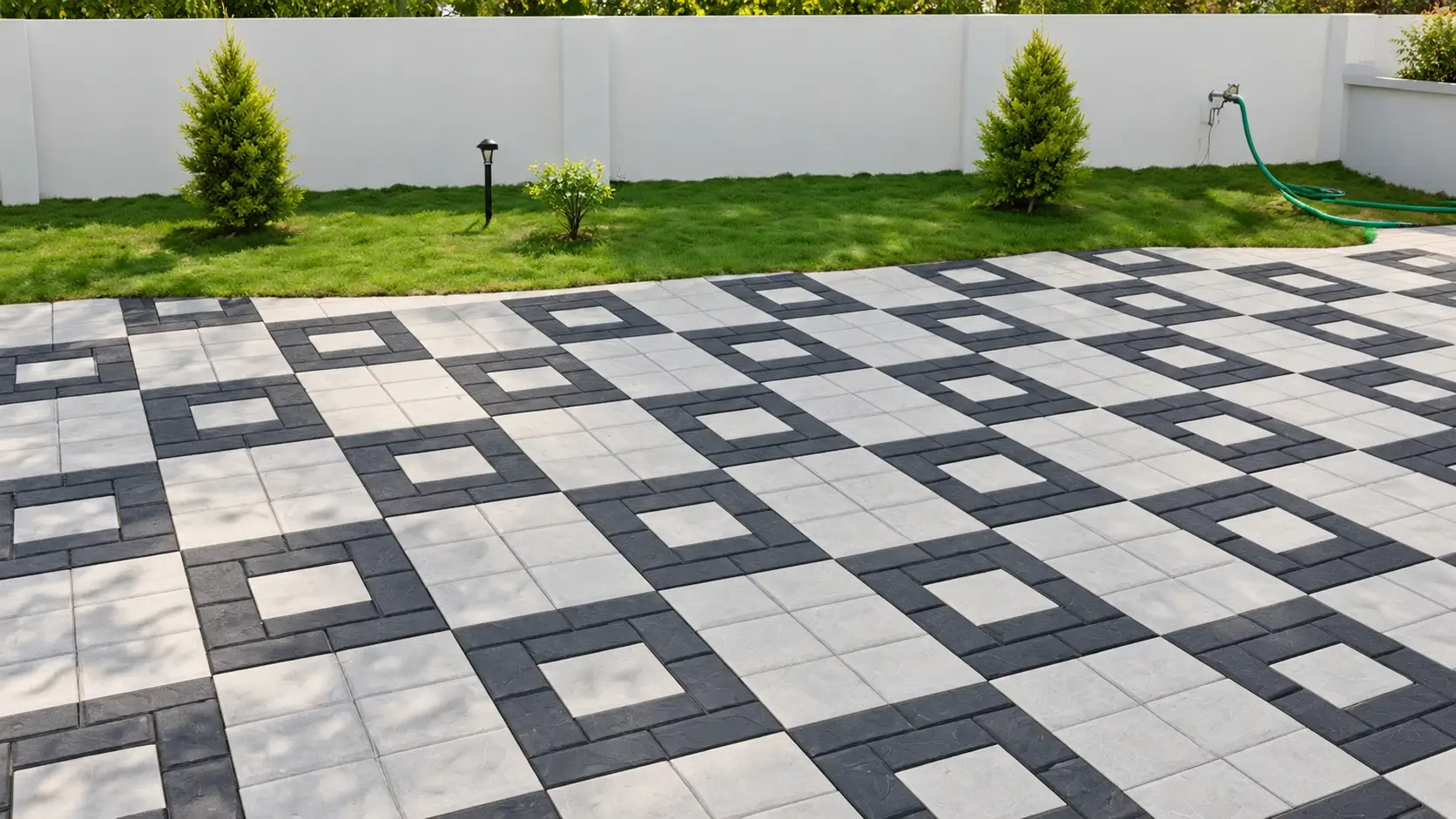
- Standard concrete interlock (60 mm): the budget-friendly choice, fine for garden paths and foot traffic.
- Heavy-duty concrete interlock (80–100 mm): what you’d want for a driveway that sees actual car traffic.
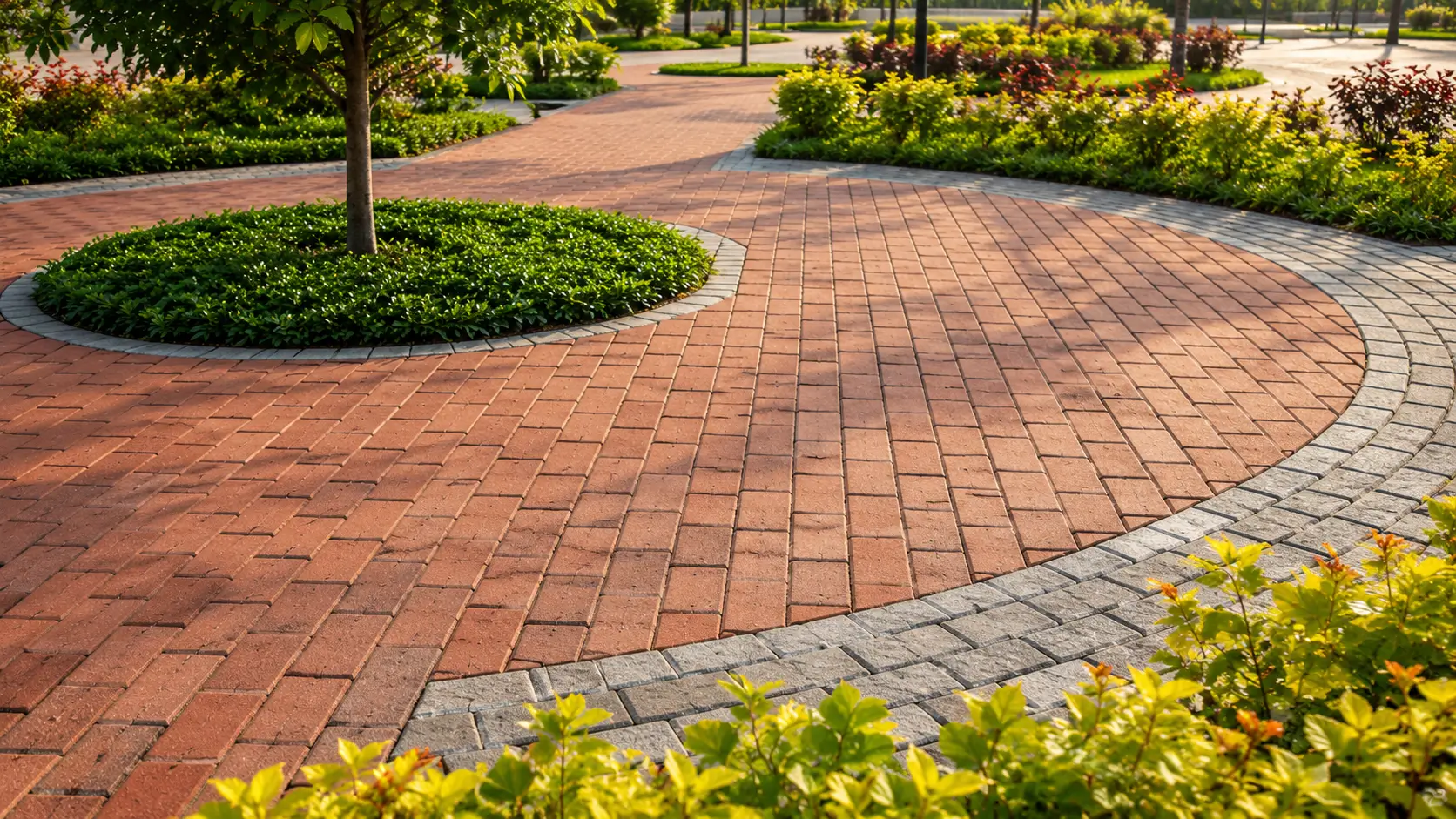
- Clay interlock pavers: a natural, eco-conscious option with a warmer, more traditional look.
- Natural stone (granite or sandstone): the premium route, mostly used on higher-end villas.
- Permeable interlock: wider gaps built in specifically for drainage, useful if your garden tends to flood.
The type you pick shouldn’t just come down to appearance. Thickness has to match what the surface will be dealing with, which ties into a mistake we’ll get to shortly.
Get a free interlock site visit
Book a free consultation and we’ll take a look at your space before quoting.
Interlock tiles installation cost in Dubai
Three things drive the price: how much area you’re covering, which tile and thickness you go with, and whether there’s an old surface to remove first. Here’s a realistic range for 2026:
| Area / use | Material (per sqm) | Installation (per sqm) | Notes |
|---|---|---|---|
| Garden path (60 mm concrete) | AED 35–50 | AED 20–30 | Foot traffic only |
| Driveway (80 mm concrete) | AED 50–80 | AED 25–35 | Rated for cars |
| Heavy-duty driveway (100 mm) | AED 70–100 | AED 30–45 | Rated for trucks and heavy vehicles |
| Pool deck (textured / anti-slip) | AED 80–150 | AED 30–40 | Slip-resistant finish |
| Natural stone / premium | AED 100–200 | AED 35–50 | Higher-end aesthetic |
On top of that, factor in old surface removal if there’s existing paving to clear, plus roadbase gravel and sand bedding, which usually adds another AED 15–20 per square meter combined. Honestly, the only way to get an exact figure is a site visit, since ground condition alone can swing the total by quite a bit.
How the installation actually works
Done properly, an interlock surface should hold up for well over a decade. Here’s roughly how a job goes from start to finish:
Site assessment
The installer checks the slope and drainage direction, and marks out the area.
Removing the old surface
Any existing concrete, grass, or damaged paving comes out first.
Compacting the base
Roadbase gravel (usually 10–25 cm, depending on how much load it needs to carry) gets laid and compacted with a plate compactor.
Sand bedding
A 5–10 cm layer of coarse sand goes down to create a level, stable base.
Laying the pattern
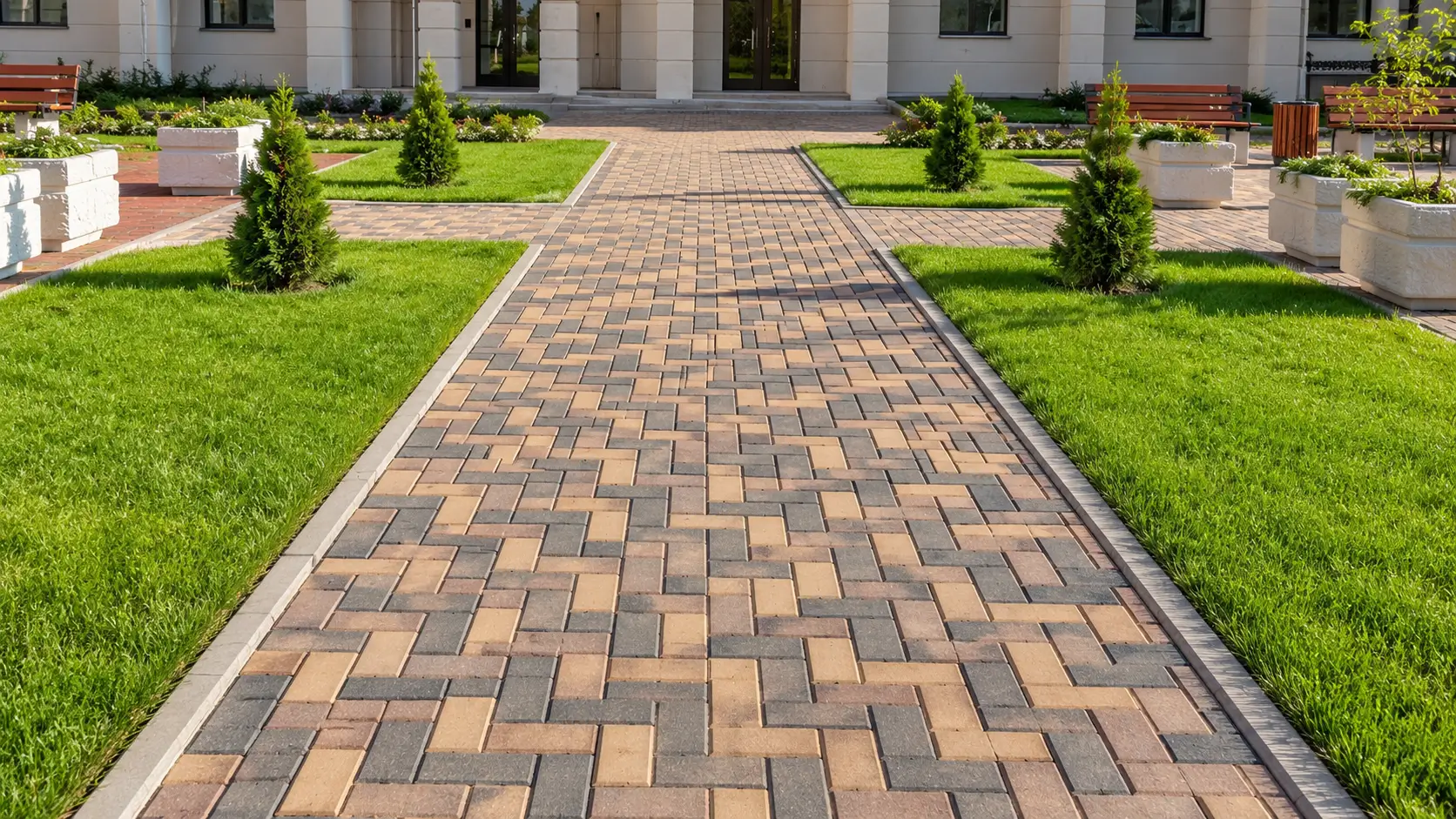
Tiles are placed by hand in whatever pattern was chosen: herringbone, basketweave, running bond, and so on.
Jointing and final compaction
Sand gets swept into the joints, then the whole surface is compacted once more to lock everything together.
Edge sealing and inspection
Edges get secured with restraints or mortar so nothing shifts over time.
This is where things tend to go wrong if it’s rushed. A poorly compacted base is by far the most common reason pavers start sinking a year or two in. Our exterior and hardscaping team handles everything from the excavation stage through to sealing.
Which interlock tiles actually hold up best here
A few things make a real difference in Dubai’s climate specifically:
Lighter shades
Grey, sand, or beige stay noticeably cooler underfoot than dark charcoal.
Textured finishes
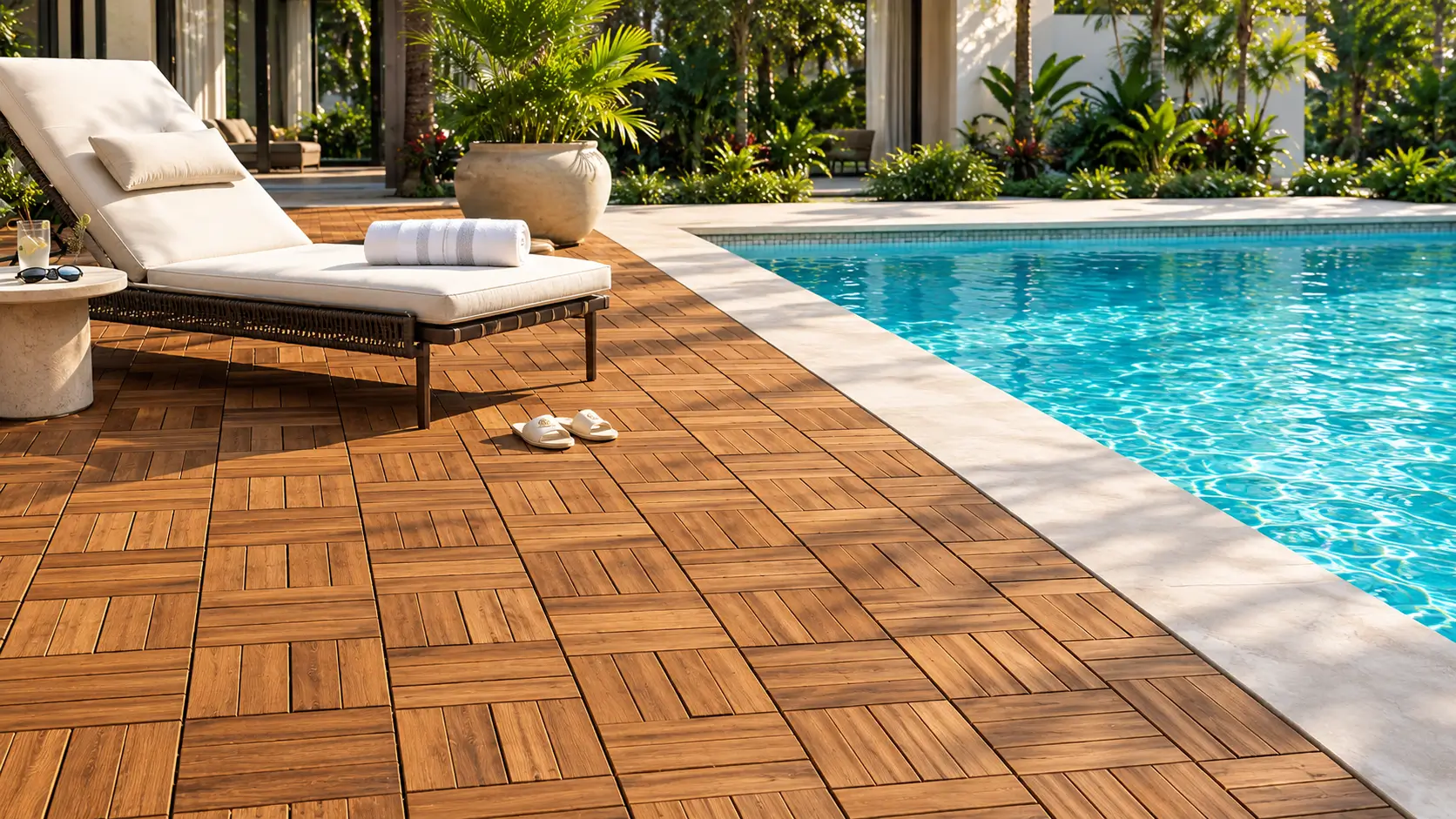
Textured or tumbled finishes grip better around pool decks when they’re wet.
Permeable tiles
These genuinely help if your garden sits low and pools water after a downpour.
Thickness
Anything under 80 mm tends to crack sooner under the surface heat we get through summer.
Mistakes that cause most interlock problems
If you’ve ever read a complaint about interlock tiles cracking or sinking within a year, it almost always traces back to one of these:
- Skipping proper base compaction to cut corners on time or cost.
- Using thin 60 mm tiles somewhere cars will actually drive.
- Not accounting for drainage slope; surfaces need a gentle gradient away from the building.
- Using plain sand instead of polymeric sand in the joints, which invites weeds and erosion.
- Picking a contractor purely on price without seeing any of their past work.
How to choose the right interlock tiles installer in Dubai
Since the workmanship matters more than the tiles themselves, it’s worth asking any contractor a few direct questions:
- Can I see actual completed driveway or garden projects in Dubai, not just renders?
- What thickness and base depth would you recommend for my specific situation?
- Can I get a written quote that separates material, labor, and base prep?
- What’s the expected timeline, and is there a workmanship warranty?
At Dream Heaven Decoration, we start every interlock job with a free site visit so the quote reflects your actual ground condition rather than a generic estimate. If you’re planning a bigger outdoor refresh, we also handle the surrounding landscaping, including planting, irrigation, and lighting, alongside the paving.
Keeping interlock tiles looking new
- Sweep regularly so sand and dirt don’t build up in the joints.
- Give the surface a rinse every few weeks, especially after sandstorms.
- Top up the joint sand every year or two as it naturally settles.
- Reseal every 2–3 years to keep the color from fading and reduce staining.
- Deal with sunken or cracked pieces early. They’re cheap to fix on their own but expensive to fix once the damage spreads.
Whether it’s a driveway that’s seen better days, a new garden path, or a pool deck upgrade, getting the base right from the start saves you money later. Book a free consultation and we’ll take a look at your space and put together an accurate, no-obligation quote. See the project portfolio or the Dream Heaven Decoration homepage for completed work.
Frequently asked questions
How much does interlock tile installation cost in Dubai?
Between AED 55 and AED 150/m², which includes material and labor. This will vary based on the thickness of the tile, material, and site conditions.
Is interlock better than regular tiles for outdoor areas?
For most outdoor areas in Dubai, yes. Interlock tiles handle heat without cracking the way poured concrete tends to, let water drain through the gaps, and a single cracked or stained piece can be swapped out on its own.
How long do interlock tiles last in Dubai’s climate?
Done properly, an interlock surface should hold up for well over a decade. A well-compacted base, the right tile thickness, regular sweeping, topping up joint sand and resealing every 2 to 3 years all help.
What’s the best pattern for a driveway?
Common patterns include herringbone, basketweave and running bond. For a driveway, tile thickness (80 mm or more for cars) and a well-compacted base matter more than the pattern, so ask your installer to recommend one for your layout.
Can I install interlock tiles myself, or should I hire someone?
Workmanship matters more than the tiles themselves. The base, with 10 to 25 cm of compacted roadbase, sand bedding, jointing and edge restraints, is where jobs go wrong, so for driveways and pool decks it is best to hire an installer with completed Dubai projects you can see.

Muhammad leads Dream Heaven Decoration from its office in Deira, Dubai, overseeing interior fit-out, exterior, pool, pergola and landscaping projects for villas, apartments and businesses.
