 Skip to content
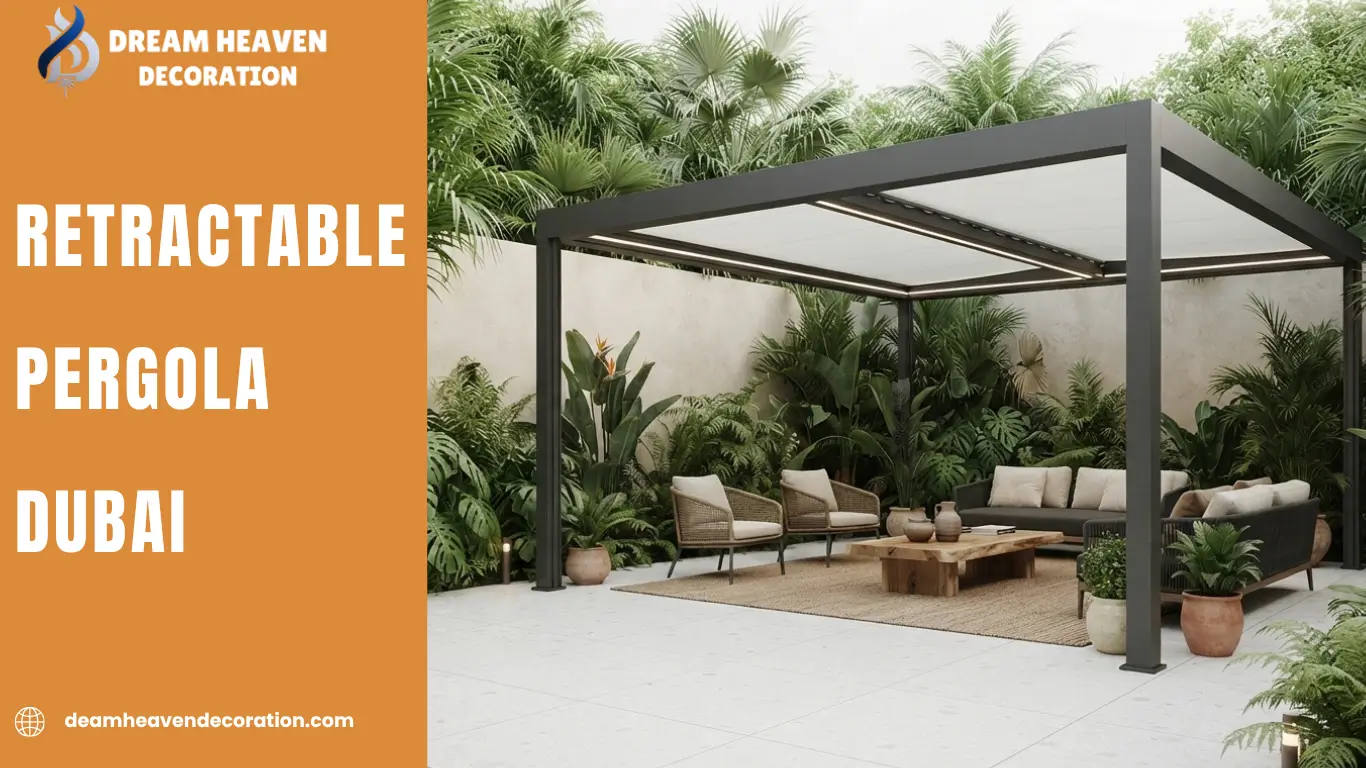
A fixed pergola gives you shade, but it gives it to you whether you need it or not. On a mild December morning, that same shade can leave a terrace feeling shadowed and slightly cold when what you actually want is sun. A retractable pergola solves that exact problem — the roof opens or closes on demand, letting you match the shade to the actual weather rather than committing to one setting year-round.
In Dubai, where outdoor comfort can shift dramatically between a breezy morning and a blazing 2 PM sun, that flexibility has made retractable pergolas one of the most requested outdoor upgrades for villas, rooftop terraces, and poolside spaces. This guide covers exactly how retractable pergolas work, the different systems available, what they cost, and what to consider before installing one.
What Is a Retractable Pergola?
A retractable pergola is an outdoor shade structure with a movable roof system that can be opened, closed, or adjusted to control sunlight and airflow, rather than providing a single fixed level of shade like a traditional pergola. Depending on the system, the roof can be operated manually or motorized, and slides open along a track or rotates via adjustable louvers.
The core appeal is straightforward: a fixed structure is a single decision made once, while a retractable pergola adapts to what the day actually calls for — full sun in the morning, full shade at 2 PM, and something in between during the transitional hours.
Get a Retractable Pergola Site Assessment
Call to action today — book a free consultation with the Dream Heaven Decoration team.
Book a Free ConsultationTypes of Retractable Pergola Systems in Dubai
Fabric Retractable Pergolas
These systems use durable, weather-resistant fabric panels that slide along a track system to extend or retreat, similar in principle to a large retractable awning built into a permanent frame. Fabric systems are generally lighter, more affordable, and offer a softer, more casual aesthetic — well suited to gardens, patios, and poolside areas where a slightly less formal look works well.

Louvered (Bioclimatic) Motorized Pergolas
Rather than fabric, this system uses adjustable aluminum or metal louvers on the roof that rotate to control light, airflow, and rain protection. When closed, the louvers overlap to provide near-complete shelter, including protection from rain; when open, they allow full sun and airflow through. These are considered the more premium option, offering a sleeker, more architectural appearance and generally greater long-term durability than fabric systems.

Manual vs. Motorized Operation
Both fabric and louvered systems can be operated manually via a hand crank, or motorized for push-button, remote, or app-based control. Motorized systems add convenience and are increasingly standard in higher-end installations, with some advanced setups offering automatic sun, rain, or wind sensors that adjust the roof without any manual input at all.
Why Retractable Pergolas Suit Dubai's Climate So Well
Adapting to a Wide Daily Temperature and Light Range
Dubai’s outdoor comfort genuinely shifts across a single day — cooler, pleasant mornings and evenings versus intense midday heat. A retractable system lets homeowners open the roof for soft morning light and airflow, then close it during peak sun hours, keeping the same space comfortable and usable throughout the day rather than only during specific hours.
Weather Responsiveness
Beyond sun control, a closed retractable roof — particularly a louvered system — can direct rain into hidden gutters and downpipes, protecting furniture and keeping the space usable even during Dubai’s occasional heavy rainfall, without needing to rush outdoor furniture indoors.
Protecting Furniture and Extending Outdoor Living
Consistent UV exposure and dust are hard on outdoor furniture over time. Being able to close the roof when a space isn’t in use helps protect furnishings, while opening it during pleasant weather maximizes genuine outdoor living time — effectively getting more usable days out of the space across the year.
A More Integrated, Built-In Look
Compared to a bolted-on shade sail or a standalone umbrella, a well-designed retractable pergola tends to feel like a genuine architectural extension of the home, rather than an accessory added afterward.
Key Features to Look For
- Motor Quality and Noise Level. For motorized systems, ask specifically about motor quality — a good system should operate smoothly and quietly, without the jarring mechanical noise that lower-quality motors can produce.
- Wind and Rain Sensors. Automatic sensors that close the roof in response to sudden wind or rain add genuine convenience and protect both the structure and any furniture underneath, particularly valuable for homeowners who travel or aren’t always present to manually respond to changing weather.
- Control Options. Most modern systems offer remote control, wall-mounted switches, and app-based control as standard, with some also supporting voice control integration for smart home setups.
- Frame Material and Finish. Architectural-grade aluminum with a powder-coated finish is the standard for Dubai installations, chosen specifically for its resistance to sun, dust, and humidity over standard steel or untreated materials.
- Drainage Design. For louvered systems especially, ask how rainwater is managed when the roof is closed — quality systems channel water into hidden internal gutters and downpipes rather than letting it drip unpredictably around the structure’s edges.
- Screen and Privacy Add-Ons. Many systems can be customized with roll-down screens, bug netting, or glass side panels, allowing the space to function more like a semi-enclosed room when needed, while still retaining the open, airy character when fully retracted.
What Does a Retractable Pergola Cost in Dubai?
Pricing varies significantly based on system type, size, and features, but general cost drivers include:
- System type — fabric retractable systems are generally more affordable than motorized louvered (bioclimatic) systems, which involve more complex engineering and mechanisms
- Size and span — larger structures may require multi-bay designs to safely cover the full area, which increases both material and installation cost
- Motorization and automation — manual systems cost less than motorized ones, and adding sensors or smart controls increases the price further
- Additional features — screens, glass walls, integrated lighting, and heating elements all add to the base cost
- Site conditions — installations in higher-wind-exposure areas may require additional structural engineering, affecting overall cost
As with any outdoor structure project, request a detailed, itemized quote rather than a single bundled figure, and confirm what maximum spans the system can safely cover during a proper site visit, since large open areas sometimes require multi-bay configurations rather than a single continuous span.
The Installation Process
- Site Assessment. A proper installation starts with a site visit to assess wind exposure, available space, structural attachment points (if wall-mounted), and drainage requirements for the specific location.
- Design and Sizing. Based on the site assessment, the system is sized and designed — including confirming whether a single-bay or multi-bay configuration is needed for larger spans, and selecting frame color and finish to match or contrast with the home’s facade.
- Power and Control Planning. For motorized systems, a nearby outdoor power point is generally recommended, and control preferences (remote, wall switch, app, sensors) are finalized during this stage.
- Structural Installation. The frame is installed, either freestanding or attached to the home, followed by the roof mechanism — track-mounted fabric or motorized louvers, depending on the system chosen.
- Testing and Handover. The completed system is tested through its full range of motion, drainage is checked under simulated conditions if relevant, and controls are set up and demonstrated before final handover.

Maintenance and Longevity
Retractable pergolas generally require modest but consistent maintenance to keep operating smoothly:
- Regular cleaning of the frame and roof material to remove dust, which accumulates quickly in Dubai’s climate
- Periodic mechanism checks, particularly for motorized systems, to confirm smooth operation and catch any early signs of wear
- Fabric inspection, for fabric-based systems, to check for UV degradation or fraying over time, since fabric components generally have a shorter lifespan than aluminum louvered systems
- Drainage checks after heavy rain, to confirm gutters and downpipes remain clear and functioning properly
With proper installation and reasonable maintenance, a quality aluminum-framed retractable pergola can last many years, though fabric components on fabric-based systems typically need replacement sooner than the structural frame itself.
How to Choose the Right Retractable Pergola Company in Dubai
- Ask specifically about wind rating and engineering. A contractor who can explain how their system is engineered for wind exposure, particularly for larger spans, demonstrates real technical competence beyond just sales.
- Compare fabric vs. louvered systems honestly for your needs. A good installer should walk you through the genuine trade-offs — cost, durability, aesthetic — rather than pushing a single product regardless of your actual use case.
- Ask about motor warranty specifically, separate from frame warranty. Motorized components often carry a different (and sometimes shorter) warranty period than the structural frame — get this clarified in writing.
- Request references or examples of installations that are a few years old. This tells you far more about how the mechanism holds up over time than a brand-new showroom demo.
- Confirm maximum span capability during a site visit, rather than relying on general marketing claims, since actual safe spans depend on your specific site conditions and system choice.
Common Mistakes to Avoid
- Choosing based on price alone without comparing system quality. A significantly cheaper quote often reflects a lower-grade motor, thinner fabric, or less robust frame material.
- Skipping the wind exposure assessment. Retractable systems, particularly larger spans, need proper engineering for wind resistance — this is not a detail to skip to save time.
- Underestimating motor maintenance needs. Motorized systems need occasional mechanical checks, and ignoring this can lead to more costly repairs down the line.
- Not planning for a nearby power source in advance. Retrofitting power access after installation is more disruptive and costly than planning for it from the start.
- Assuming all “retractable pergolas” are the same product. Fabric and louvered systems perform very differently — make sure the specific system matches your actual priorities, whether that’s cost, durability, or full weather protection.

See Our Latest Projects
Explore pergolas, terraces and outdoor spaces we have completed across Dubai.
Our PortfolioFrequently Asked Questions
What's the difference between a retractable pergola and a bioclimatic pergola?
Can a retractable pergola handle Dubai's strong winds?
Is a motorized retractable pergola worth the extra cost over a manual one?
Does a retractable pergola protect against rain?
How long does a retractable pergola last in Dubai's climate?
Conclusion
A retractable pergola offers something a fixed structure simply can’t: genuine flexibility to match your outdoor space to the actual weather, hour by hour, rather than committing to a single level of shade year-round. Whether you choose a lighter fabric system or a premium motorized louvered design depends on your budget, how much weather protection you need, and the overall look you want for your home.
Before committing to a system, get a proper site assessment for wind exposure, compare fabric and louvered options honestly against your actual needs, and confirm motor warranty terms in writing. Getting those details right is what separates a retractable pergola that becomes a daily-use favorite from one that ends up stuck in a single position, functioning more like an expensive fixed structure than the flexible space it was designed to be.
Planning a Retractable Pergola? Start With a Site Assessment
Book a free consultation and Dream Heaven Decoration will assess wind exposure, space and drainage before you commit to a system.
Book a Free ConsultationGuarantees & Policies
At Dream Heaven Decoration, we believe trust is built through transparency, quality, and commitment. Every project we take on is guided by strict standards to ensure excellence and client satisfaction from start to finish.
On-Time Delivery
Projects completed on schedule without compromising quality.
Customer Satisfaction
Every step is tailored to match your vision perfectly.
Get a Free Quote
Contact our experts for a customized quote and consultation.
