 Skip to content
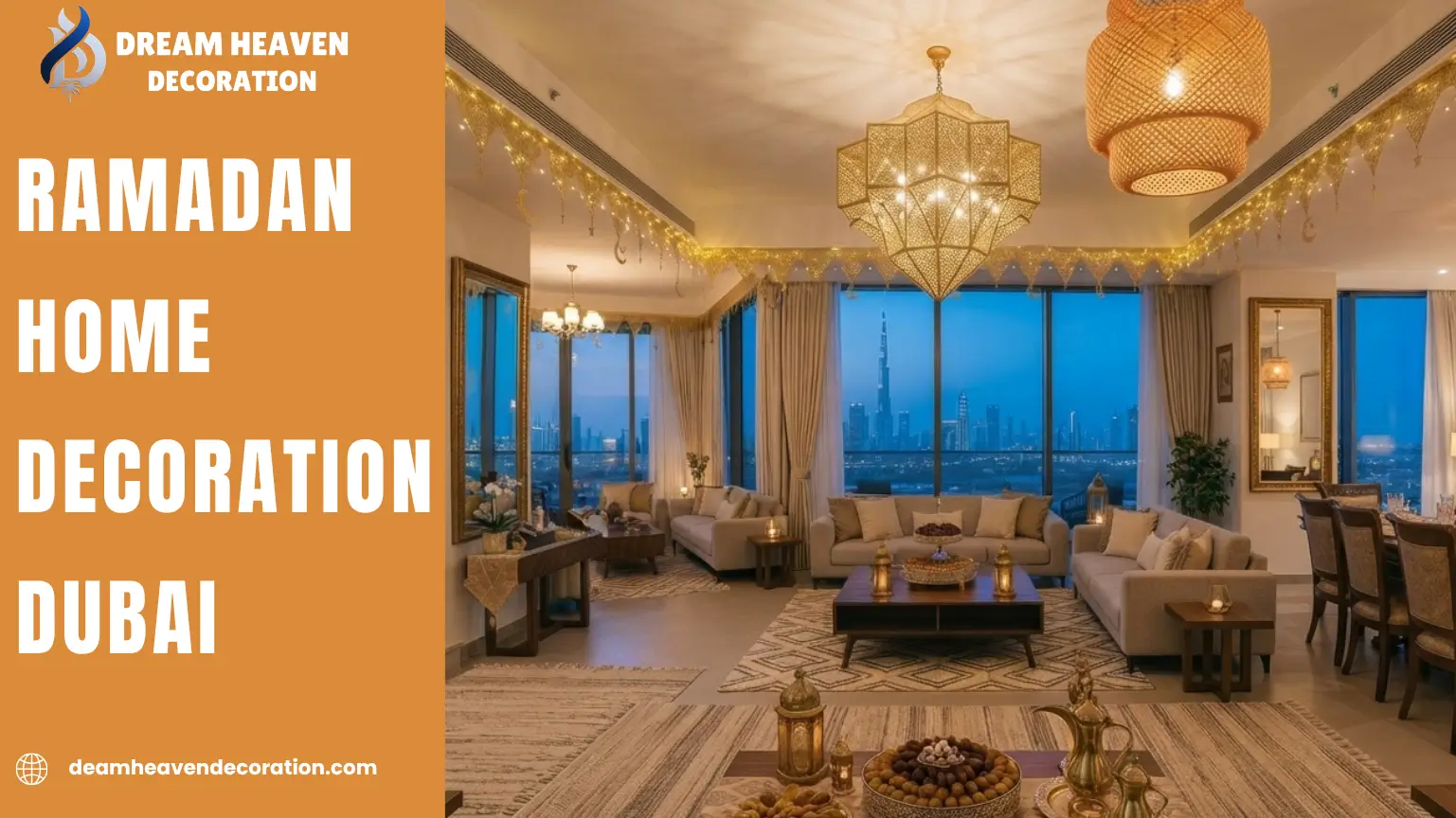
Walk through almost any Dubai neighborhood in the weeks before Ramadan and you’ll notice the shift before you notice the decorations themselves — a kind of quiet anticipation, front doors getting extra attention, balconies catching string lights they didn’t have last week. Ramadan home decoration in Dubai isn’t really about following a trend. It’s a citywide ritual that turns private homes into small expressions of a much bigger, shared occasion.
That said, doing it well takes more thought than simply hanging a lantern by the door. This guide walks through the traditional elements that anchor most Ramadan decor, the newer room-by-room ideas Dubai homeowners are embracing this year, practical tips for lighting and window treatments during the fasting schedule, and where to source everything without blowing your budget.
Why Ramadan Home Decoration Matters So Much in Dubai
Ramadan decoration in Dubai carries weight beyond aesthetics. Many residents describe the practice as a way of reflecting the spiritual essence of the month and the joy that comes with it, and say it strengthens the sense of community, since neighbors and passersby end up sharing in the same festive atmosphere. The city has leaned into that spirit collectively too — an annual home decoration competition organized by Brand Dubai now invites households across the emirate to transform their facades into creative, illuminated displays celebrating generosity, togetherness, and community.
In short, decorating your home for Ramadan isn’t just personal expression — it’s part of a much larger, visible tradition across the city.
Plan Your Ramadan Decor
Call to action today — book a free consultation with the Dream Heaven Decoration team.
Book a Free ConsultationTraditional Ramadan Decor Elements
A handful of core elements show up in almost every Ramadan-decorated home in Dubai, regardless of style or budget. These are the details worth prioritizing first.
Lanterns (Fanoos)
The lantern is the single most recognizable symbol of Ramadan decor, and for good reason — it represents light, guidance, and the warmth of the season. Lantern sets range from traditional metal-and-glass designs to sleeker, LED-based modern versions, and they work equally well hung by an entrance, lined along a hallway, or grouped as a table centerpiece.
Crescent Moon and Star Motifs
Crescent moons and stars are used everywhere from wall art to standalone light installations, and they carry genuine significance — for many residents, the crescent moon is considered the single most essential Ramadan decoration in the home. LED crescent lamps and wall-mounted moon silhouettes have become especially popular for a more contemporary take on the motif.
Textiles, Cushions, and Rugs
Rich fabrics — velvet cushions, embroidered throws, patterned rugs — bring warmth and texture into a space, particularly around seating areas used for Iftar gatherings. These pieces are also some of the easiest to reuse year after year, making them a practical long-term investment compared to more disposable decor items.
Calligraphy Art and Wall Decor
Arabic calligraphy pieces, often featuring phrases associated with Ramadan, are a popular way to add cultural and spiritual meaning to a room without needing a full decor overhaul. A single well-placed calligraphy piece can anchor an entire room’s Ramadan theme.
Bakhoor and Incense Accessories
Scent plays as much a role as visuals in setting a Ramadan atmosphere. Bakhoor burners and incense accessories are commonly placed near seating and dining areas, adding a sensory layer that lighting and textiles alone can’t achieve.

Room-by-Room Ramadan Decoration Ideas for 2026
Beyond the traditional staples, Dubai’s Ramadan decor trends have shifted toward more functional, room-specific updates that reflect how families actually use their homes during the month — especially in apartments, where space and layout come with their own constraints.
The Entrance and Facade
This is where most of the visible “Ramadan spirit” lives, especially given the city’s growing culture of decorated facades. Lantern-shaped lamps, wrapped lighting around columns or railings, and one or two large crescent moon installations create an inviting first impression without requiring a full redesign.

The Living and Majlis Area
Since Iftar gatherings are the heart of the month, this space deserves the most attention. Dubai’s milder February and March evenings have made it increasingly common to extend seating outdoors — a balcony or terrace majlis with weather-resistant furniture, soft cushions, and layered lighting like floor lamps paired with traditional lanterns can comfortably handle overflow guests that a standard apartment living room wasn’t designed for.
Bedrooms and Rest Areas
With Suhoor typically falling around 3 AM, window treatment matters more during Ramadan than almost any other time of year. A layered approach — sheer curtains for daytime privacy without blocking light, paired with blackout drapes that close after Suhoor — helps maintain a calm, restful space during the irregular sleep schedule the month brings.
Home Office or Work Nooks
Many professionals in Dubai continue working reduced hours through Ramadan, which makes a small, distraction-free work corner worth setting up if space allows. A simple wall-mounted desk with tidy cable management and layered lighting — brighter task lighting for focused hours, softer dimmed lighting in the evening — helps ease the transition from work mode into Iftar preparation.
Suhoor and Vanity Nooks
A dedicated console table with a mirror and soft LED lighting makes pre-dawn routines smoother and less jarring than relying on a single overhead light. This kind of small, purposeful nook has become one of the more popular “micro update” trends for Ramadan 2026, especially in apartments where a full room refresh isn’t practical.
Lighting: The Detail That Ties Everything Together
Lighting deserves its own focus, since a Dubai home effectively needs to support three very different moods across each 24-hour cycle: the calm of daytime rest, the anticipation building toward Iftar, and the early hours before Suhoor. Warm-toned lighting generally works better than cool, harsh overhead lights for the main living and dining areas, and smart lighting systems that gradually dim toward Suhoor or brighten gently at sunset can make these transitions feel far more natural than manually flipping switches.

How Much Does Ramadan Home Decoration Cost in Dubai?
Costs vary enormously depending on scale and material quality, and Dubai households span a wide range here. Some families spend relatively modestly on lanterns, string lights, and reusable textiles, while others invest significantly more — certain households report spending between roughly 8,000 and 9,000 dirhams on decorations, particularly when participating in citywide decoration competitions that reward more elaborate facade displays.
For most homes, a moderate budget covering entrance lighting, a few lantern sets, textiles for the majlis area, and some wall decor is enough to create a genuinely festive atmosphere without needing competition-level spending.
Where to Buy Ramadan Decorations in Dubai
Dubai offers a wide spread of options depending on how curated, traditional, or budget-conscious you want to be.
- Online specialty retailers offer curated collections spanning lanterns, garlands, tableware, and ambient lighting, often with UAE-wide delivery.
- Contemporary lifestyle stores lean toward modern candles, wall art, and statement lighting suited to more minimalist interiors.
- Souks and traditional markets — particularly textile and spice souks — are ideal for fabrics, incense and bakhoor accessories, and authentic traditional pieces, usually at lower prices with room to negotiate.
- Large retail chains and hypermarkets are a reliable, budget-friendly option for string lights, lanterns, and decorative accessories in a range of sizes.
- Party and seasonal decor stores are useful for last-minute purchases, banners, and ready-made Iftar table setups.
Combining a couple of these sources — for example, souks for fabric and incense, plus an online retailer for lighting — tends to give the best balance of authenticity, variety, and convenience.
Tips for Decorating on a Budget
- Reuse and refresh last year’s decor rather than replacing everything — swapping cushion covers or adding a new lantern can meaningfully change the look without a full re-buy.
- Invest in reusable pieces first. Textiles, rugs, and quality lanterns hold up year after year, while paper decorations and disposable items need replacing annually.
- Watch for early bundle offers. Pricing on Ramadan decor tends to rise as the month approaches, so shopping a few weeks early usually saves money.
- Focus spending on one or two statement pieces — a striking crescent installation at the entrance or a well-lit majlis corner — rather than spreading a small budget thin across every room.
- Store decorations properly after Ramadan. Keeping items in a dry space, removing batteries from lighting, and wrapping fragile pieces carefully protects your investment for the following year.
Common Mistakes to Avoid
- Relying entirely on harsh overhead lighting. It works against the calm, warm atmosphere Ramadan decor is meant to create.
- Overlooking window treatment for irregular sleep hours. Suhoor and daytime rest both need proper light control, not just standard curtains.
- Under-planning seating for Iftar gatherings. Standard living rooms often can’t comfortably host larger groups, which is why the shift toward outdoor or balcony majlis setups has grown so much.
- Buying disposable decor every year instead of investing in reusable pieces. This adds up in cost over time and creates unnecessary waste.
- Treating decoration as purely visual. Scent, lighting warmth, and textile comfort all contribute to the atmosphere as much as the visible decor itself.

See Our Latest Projects
Explore homes, majlis spaces and interiors we have decorated across Dubai.
Our PortfolioFrequently Asked Questions
When should I start decorating my home for Ramadan in Dubai?
What are the most essential Ramadan decoration items?
Is it worth setting up an outdoor majlis for Ramadan?
How can I make Ramadan lighting feel less harsh?
Can Ramadan decorations be reused every year?
Conclusion
Ramadan home decoration in Dubai works best when it balances tradition with how a household actually lives through the month — lighting that respects an irregular sleep schedule, seating that can handle a full Iftar table, and a handful of meaningful pieces rather than decoration for its own sake. Whether you’re going all-in on a facade display or simply refreshing a few key corners of your home, the goal is the same: a space that feels warm, intentional, and ready to welcome the people who matter most during the holy month.
Planning Your Ramadan Decor? Talk to Our Team
Book a free consultation and Dream Heaven Decoration will help you plan lighting, seating and decor for the month.
Book a Free ConsultationGuarantees & Policies
At Dream Heaven Decoration, we believe trust is built through transparency, quality, and commitment. Every project we take on is guided by strict standards to ensure excellence and client satisfaction from start to finish.
On-Time Delivery
Projects completed on schedule without compromising quality.
Customer Satisfaction
Every step is tailored to match your vision perfectly.
Get a Free Quote
Contact our experts for a customized quote and consultation.
